Vibe coding growth guidesSaaS launch and marketing
How to Get Your First 100 Users: A Step-by-Step Playbook for Vibe-Coded Apps
A channel-by-channel plan for your first 100 users when you vibe coded the app and have no audience: who to target, where to go, what to send, and real numbers.
 By Pruthvi RajNovember 23, 2026
Here is how to get your first 100 users when nobody knows your app: do it by hand. Pick one narrow group, go where they already talk about the problem, and invite them one at a time.
Quick answer:
- Write down who your first 100 users are, in one sentence.
- Pick 2 of the 10 channels below and ignore the rest for a month.
- Message people who already described the problem, one at a time.
- List the app on launch platforms and directories for a slow trickle.
- Ask every happy user to bring one more person.
This is what worked for most of the 100+ consumer companies Lenny Rachitsky studied. Over half found their early users by going where their audience already gathered.
How to get your first 100 users: what you'll need
| What | Time | Cost |
|---|---|---|
| Live app on its own domain | 1 hour | Domain fee |
| One-sentence user definition | 30 minutes | Free |
| Analytics with UTM tags | 1 hour | Free tiers exist |
| Accounts in 2 communities | 2–3 weeks of light activity | Free |
| Outreach spreadsheet | 30 minutes a day | Free |
| Logo, 3 screenshots, 2 descriptions | 2 hours, once | Free |
Plan on about four weeks of one to two hours a day.
Step 1: Define exactly who your first 100 users are
A target like indie hackers or small businesses is too vague. You can't find where a vague group gathers.
Write your user in one sentence with this shape:
[role] who [does a specific task] and currently [uses a workaround they dislike].
- Weak: "people who want to be more productive"
- Strong: "freelance bookkeepers who chase clients for receipts over WhatsApp every month"
If you can't name three places where the strong version hangs out, narrow it again.
Find the moment of pain
Andy Ward took MinervaAI to the top 50 on Product Hunt and got zero signups in five days. His takeaway: launch sites bring awareness, not users.
The people who sign up are the ones you catch describing the problem, in a Reddit thread or a Discord. Write down the exact words your user types when frustrated. They become your search terms in Step 3.
Set a weekly number
Paul Graham's essay Do Things that Don't Scale frames growth by the week. Before 100 users, set a flat target, like 10 new users a week, and judge every channel against it.
Step 2: Go where your users already are
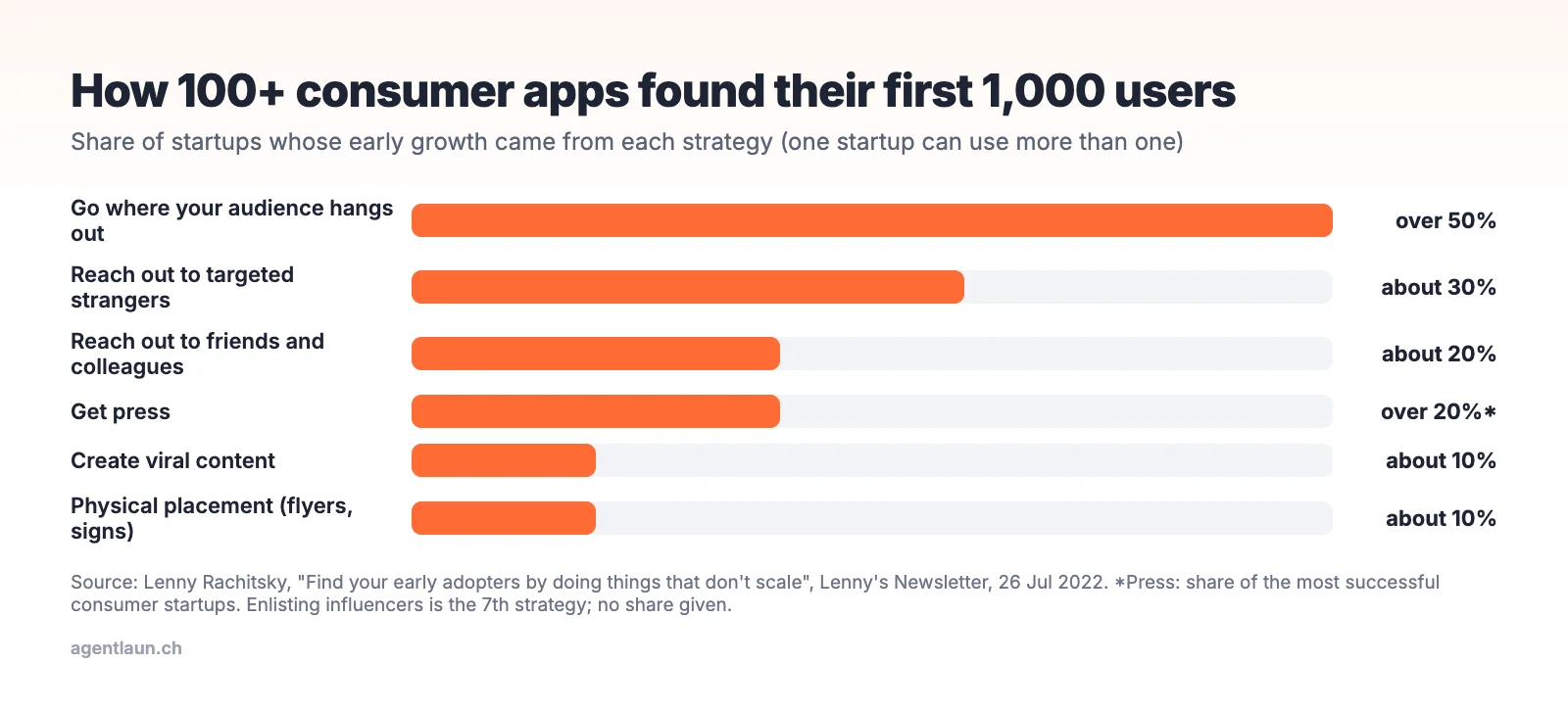
Almost every startup in Lenny's review got most of its early growth from one or two channels. Here are 10 you can use with no audience, and what real launches got.
| Channel | Effort | What real cases got |
|---|---|---|
| Niche communities | High | Gachari: 500 users from one post |
| Friends and their networks | Low | Strava: about 100 users |
| DMs to people with the problem | Medium | PostDew: ~10 DMs, 0 signups |
| Early supporter list | Medium | Product Hunt team: 100 in a week |
| Show HN | Low | PostDew: flagged, 0 signups |
| Product Hunt | High | MinervaAI: top 50, 0 signups |
| Launch platforms and directories | Medium | ShieldLabs: 171 sessions |
| Alternatives and review sites | Low | No public numbers |
| Meetups and events | High | Hipcamp: ~100 from a table outside REI |
| Search pages and AI answers | High, slow | A new site can take weeks to get noticed |
The channels that produced users put the founder in direct contact with one group. The broadcast channels sent visits that rarely became signups.
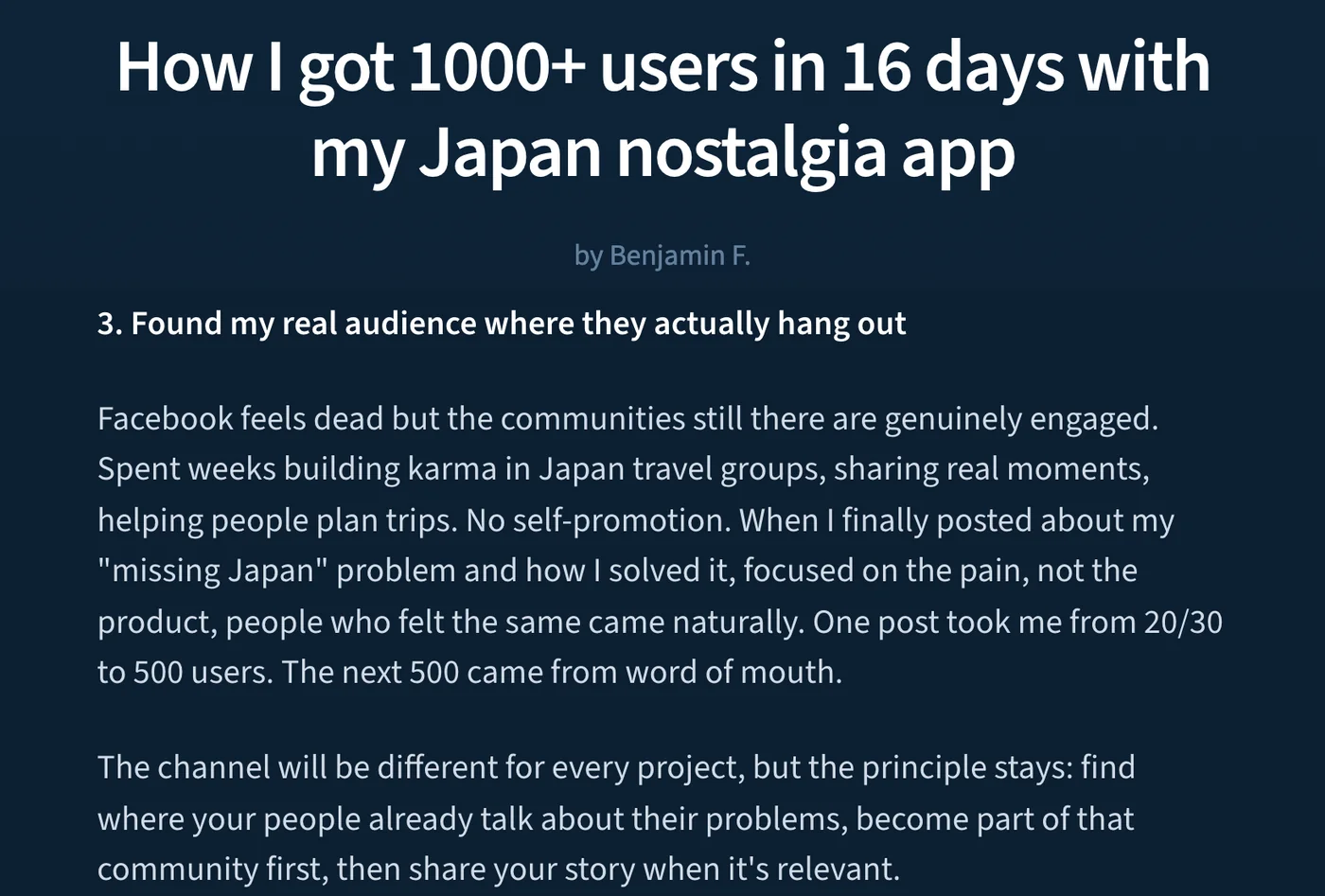
Gachari shows the community route done well. Its founder spent weeks helping in Japan travel groups on Facebook without promoting anything. Then came one post about the problem, not the product.
That post took the app from 20–30 users to 500. The next 500 came from word of mouth.
Subreddit rules vary a lot, so check our list of the best subreddits to promote your app first.
If you built with Lovable, Replit or another tool
- Lovable: the Growth tools are on all plans as of November 2026. "Outreach and communities" finds communities, reads their rules and drafts posts. You still send them yourself.
- Replit: the SEO Agent fixes technical SEO on paid plans. It doesn't do outreach.
- Bolt, v0, Cursor, Claude Code: ask your coding agent to find communities for your one-sentence user and draft a post for each. Then post by hand.
Step 3: Do manual outreach (templates you can copy)
Paul Graham calls this "the most common unscalable thing founders have to do at the start": recruiting users by hand. In Lenny's review, outreach to targeted strangers drove about 30% of early growth.
Who to message
Search the communities from Step 2 for the phrases from Step 1. Message people who wrote them in the last 30 days, because they have the problem today.
PostDew's founder sent about 10 cold LinkedIn DMs and got 2 replies and 0 signups. The next plan was 50 DMs to people who had described the pain in a recent post. That's the right fix.
Reply in public first
That's the exact thing that pushed me to build something. What I ended up doing was [one-line approach]. Happy to share the tool if it's useful, it's free while I'm testing it.
Answer their question first. Mention the app only if it solves what they asked.
Then send a short DM
Hi [name], saw your post in [community] about [their exact problem]. I built [app] for that after hitting the same wall. Would you try it for 5 minutes and tell me where it breaks? Here's a direct link, no card needed: [link?utm_source=dm]
Keep it under 60 words, with no feature list.
Follow up once
No worries if it's not a fit. If you did try it, the one thing I'd love to know: what almost made you close the tab?
Set them up yourself
Stripe's founders were known for the "Collison installation". When someone agreed to try Stripe, they took the laptop and set it up on the spot.
Your version is a 10-minute screen share. Offer it to each of your first 20 users.
Step 4: List on launch platforms and directories
Listings rarely bring 100 users alone. But they're permanent, they send a few visitors for months, and they give Google and AI assistants something to find.
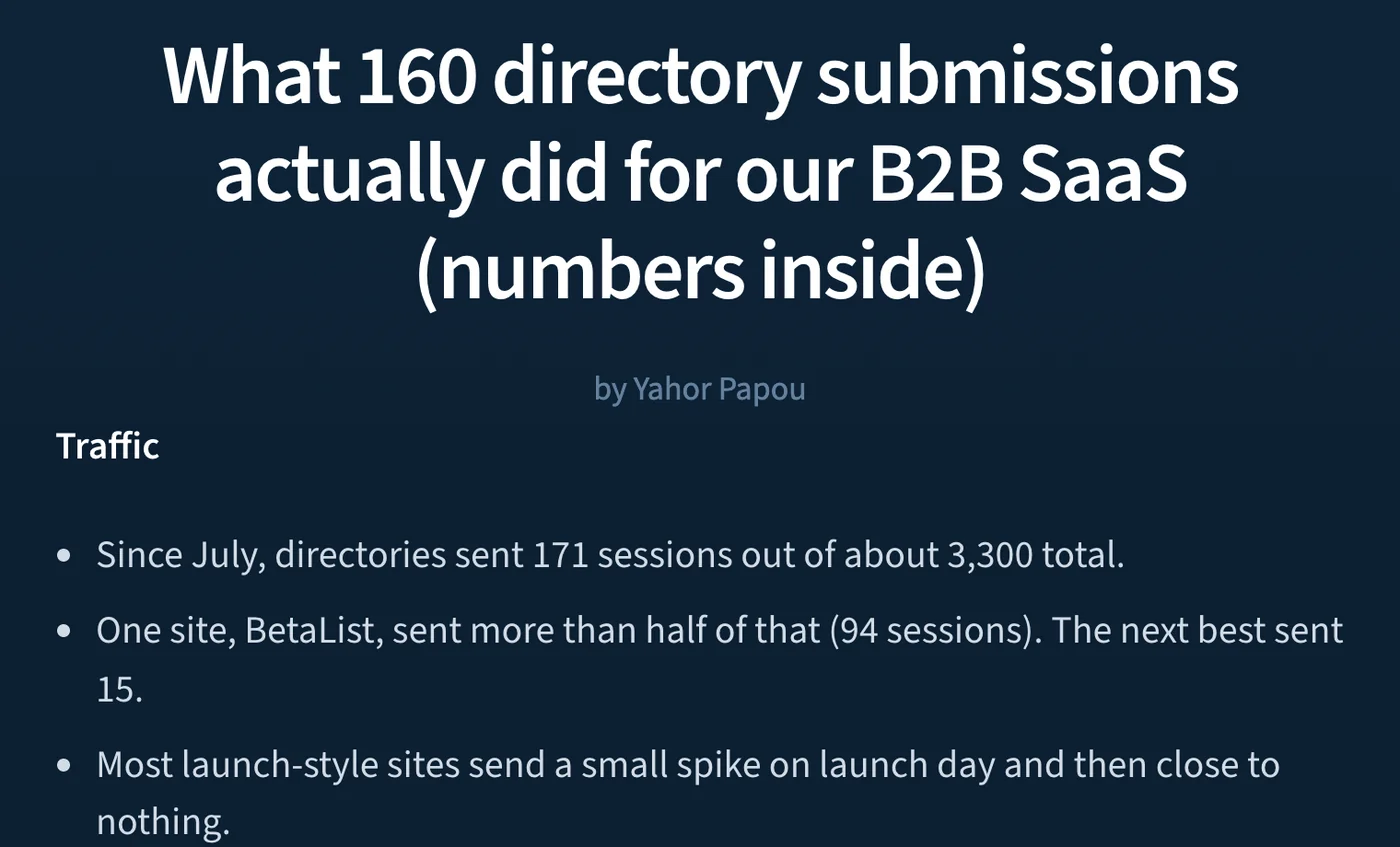
ShieldLabs submitted to about 160 directories and got 171 sessions in two months, 94 of them from BetaList. Only 2 signups were traced to directories, and the author says tracking broke between the site and the app.
Which platforms first
These are the biggest launch platforms in the AgentLaunch catalog, checked in September 2026. DR is Ahrefs Domain Rating; visits are monthly SimilarWeb estimates.
| Platform | DR | Monthly visits |
|---|---|---|
| Product Hunt | 91 | 3.7M |
| AlternativeTo | 80 | 2.1M |
| Peerlist | 77 | 486K |
| SaaSHub | 81 | 407K |
| BetaList | 76 | 259K |
| Uneed | 76 | 173K |
| Lovable App | 58 | 164K |
| MicroLaunch | 64 | 93K |
| Fazier | 83 | 87K |
All are free except BetaList, which is paid only. Fazier and Lovable App ask for a badge. Lovable App is an independent site, not part of Lovable.
Of the 352 directories we profile, 293 have a free route. Our launch platforms hub lists them by type.
Our guide on where to submit a vibe-coded app puts them in order. Start the ones with long queues first, since some free queues run for months.
Product Hunt: plan a day, not a submission
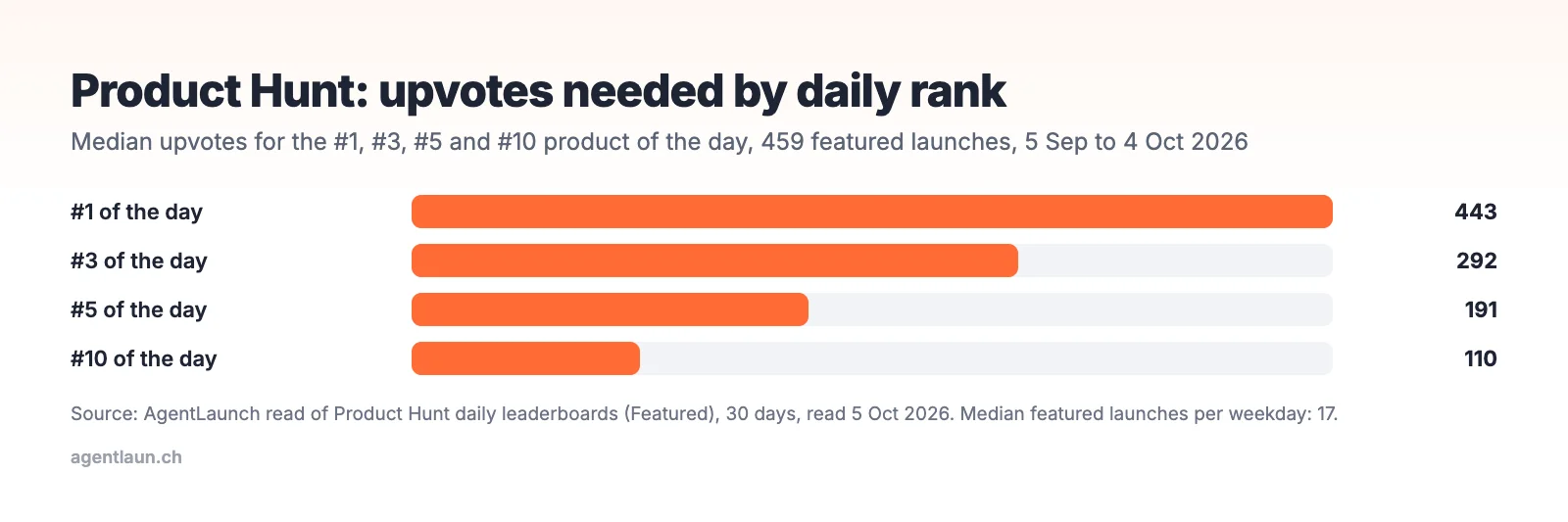
We read 30 days of Product Hunt leaderboards, 459 featured launches in all. The median #1 product had 443 upvotes, and the median #10 had 110.
Without an audience, top 10 is hard, and top 50 can still mean zero signups. Our Product Hunt guide for vibe-coded apps covers the prep.
Show HN: follow the rules exactly
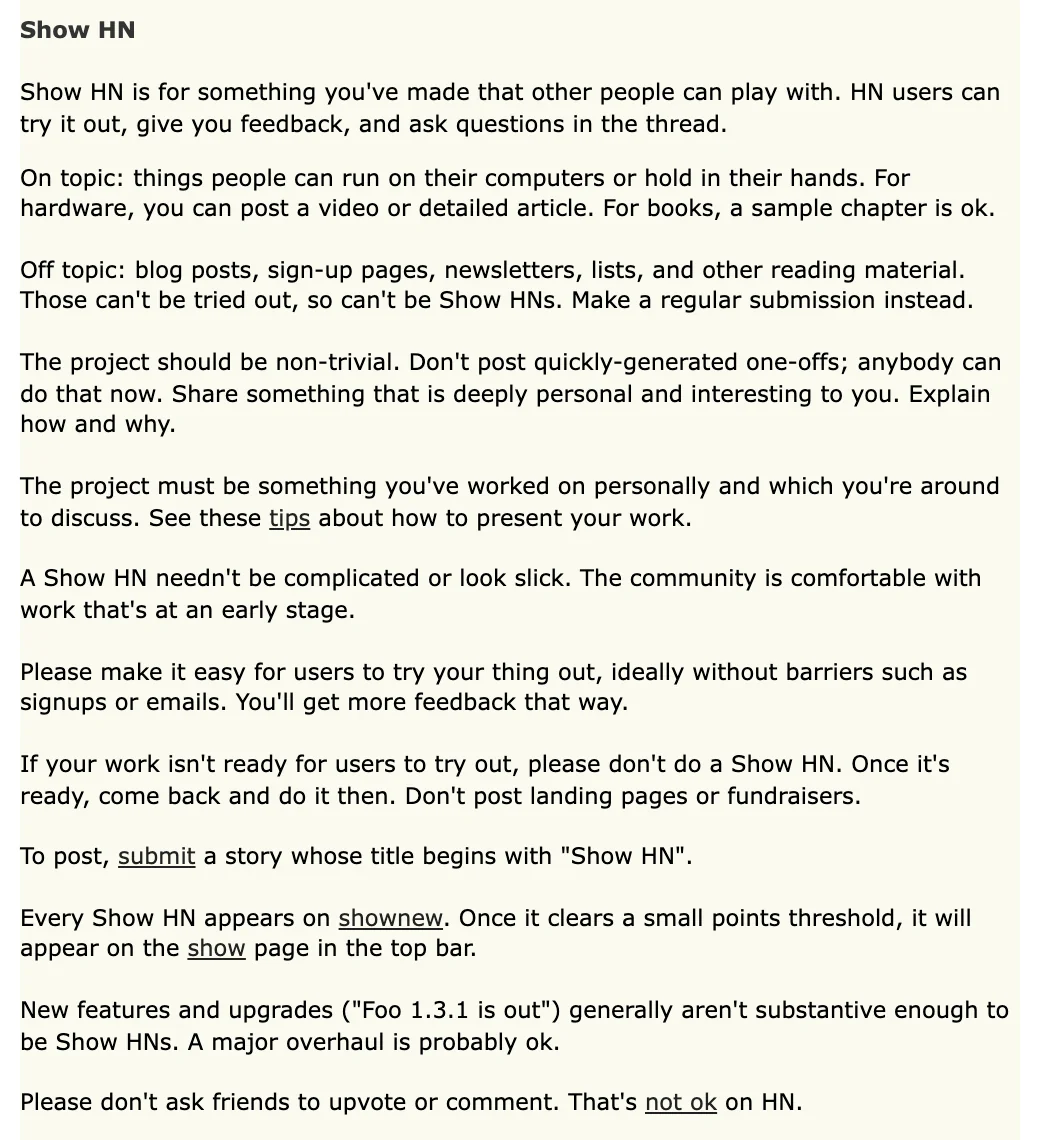
Show HN is for something people can play with, ideally without signups. Landing pages are off topic, asking friends to upvote is banned, and the rules now say "Don't post quickly-generated one-offs."
If your app needs an account before it does anything, add a no-login demo first.
Tag every link before you submit
Give each listing its own utm_source, like ?utm_source=betalist. If the app runs on a subdomain, pass the tag through to sign-up, or signups get counted as direct traffic.
Submitting to dozens of sites by hand takes days. AgentLaunch is an AI agent you run from Claude Code, Codex or Cursor that does it in a real browser.
It writes copy for each site, stops only for CAPTCHAs, payments or 2FA, and tracks every listing. Before you pick any tool, check which directories fit your app for free.
Step 5: Turn your first users into referrals
Word of mouth compounds. Strava got about 100 users from friends, then about 1,000 within 12 months by word of mouth.
Ask at the moment of value, and reward both sides
Ask right after the user gets a result, like a finished report. Don't ask at sign-up. One line works: "Know one other person who'd use this? Here's your link."
Dropbox's referral program gives the friend 500 MB of storage and the referrer half a gigabyte per referral on Basic. Your version can be an extra month or more credits.
Build the referral link with your coding agent
Paste this prompt into any builder. It's plain app logic.
Add a referral link to the account page:
/?ref=<user_id>. When a visitor arrives withref, store it in a cookie for 30 days and save it on the new user's record at sign-up. Show each user how many people joined through their link.
What results to expect when getting your first 100 users
These are single cases, not averages.
- One community beats many launches. One group post got Gachari 500 users.
- Broadcast launches send visits, not signups. Show HN, Product Hunt and ~160 directories produced almost no traced signups.
- Timing varies a lot. Gachari passed 1,000 users in 16 days. PostDew had zero paying customers after three weeks.
From 100 to your first 1,000 users
Lenny's seven strategies cover the first 1,000 too. Once a channel brings users, double down on it instead of adding new ones.
Then start the slow channels that compound, like listings AI assistants can cite. See how to get recommended by ChatGPT and the wider plan for how to market a vibe-coded app.
Common mistakes
- Launching everywhere on one day. Pick two channels and stay with them.
- Posting before participating. Communities remove promo posts from new accounts.
- Mass DMs with a pitch. Message fewer people, the ones who described the problem.
- A sign-up wall before value. Gachari kept more users by letting people try three draws first.
- No source tracking. Without UTM tags you can't tell which channel worked.
- Confusing users with customers. 100 free users is a different goal from your first 10 customers.
FAQ
How long does it take to get the first 100 users for an app?
There's no published benchmark. Cases range from 100 in a week to zero after three weeks. Plan for about a month of daily outreach.
How do you get your first 100 users from Reddit?
Pick niche subreddits where your user asks questions and read their self-promotion rules. Help for two or three weeks, then post about the problem, not a launch.
Is Product Hunt enough to get 100 users?
Usually not. The #10 product of the day had a median of 110 upvotes, and one founder reached the top 50 with zero signups.
Do startup directories bring real users?
A few, slowly. They are better at making you findable than at driving signups.
How do I get first users for a mobile app?
The same first steps apply, plus app store search. Our guide on how to get users for your app compares web and mobile channels.
Should I run paid ads to get my first 100 users?
Paid ads weren't among the seven strategies in Lenny's review. Spend the first month on outreach, and you'll learn what to say in an ad later.