Field notes
Product Hunt First Comment Template (With Examples)
A fill-in Product Hunt first comment template with three examples, the mistakes that make it read like an ad, a pre-post checklist, and data from 30 days of leaderboards: the top five had 4× the comments of everyone else.
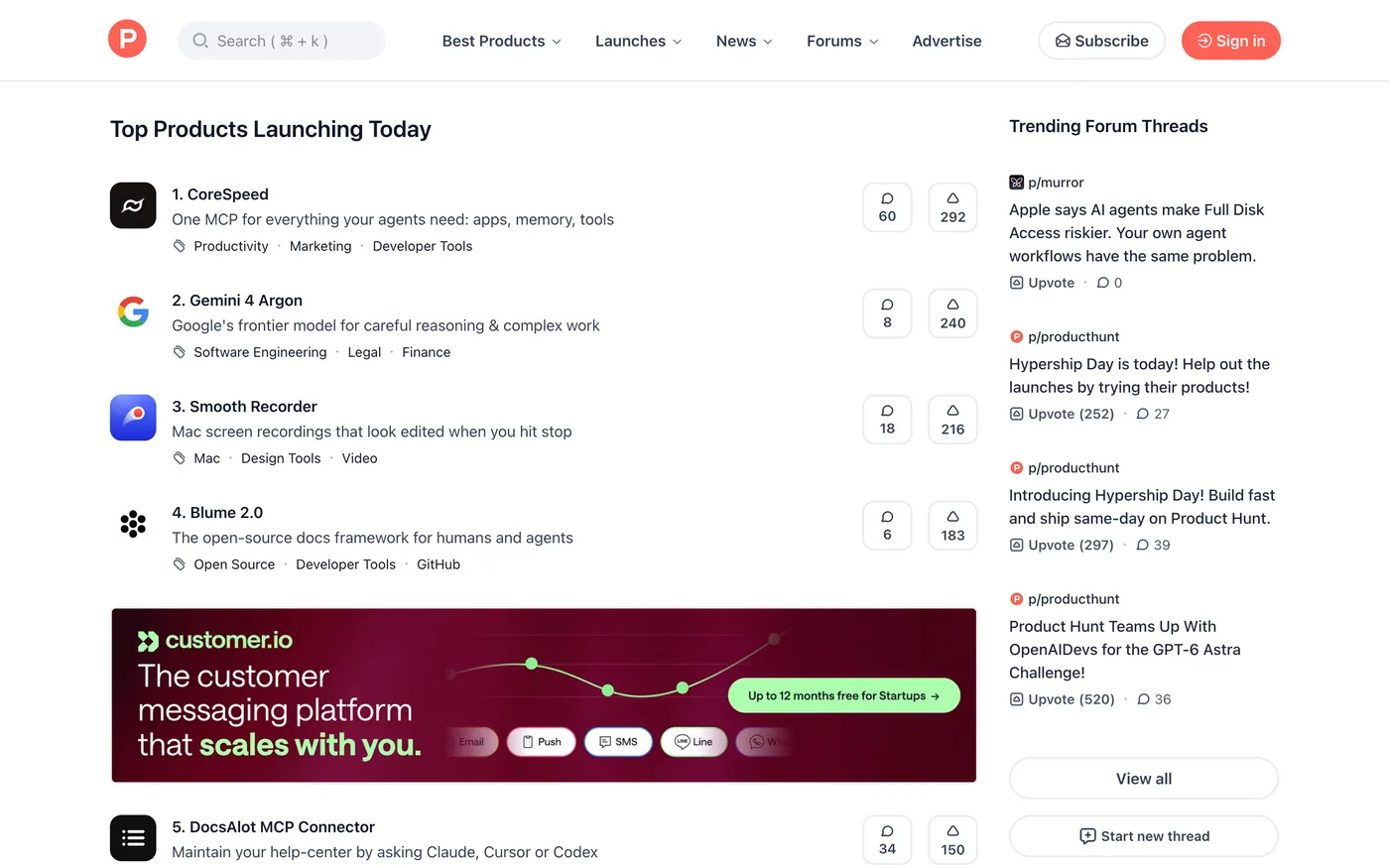
Your Product Hunt first comment should introduce who you are, why you built the product, what it does and who it's for, anything special for launch day, and one specific question for the community. Product Hunt says 70% of products that reached Product of the Day, Week or Month had a first comment from the maker. It appears right below your gallery, so most visitors read it before deciding to upvote or comment.
Below: a fill-in template, two examples, and the mistakes that make first comments read like ads.
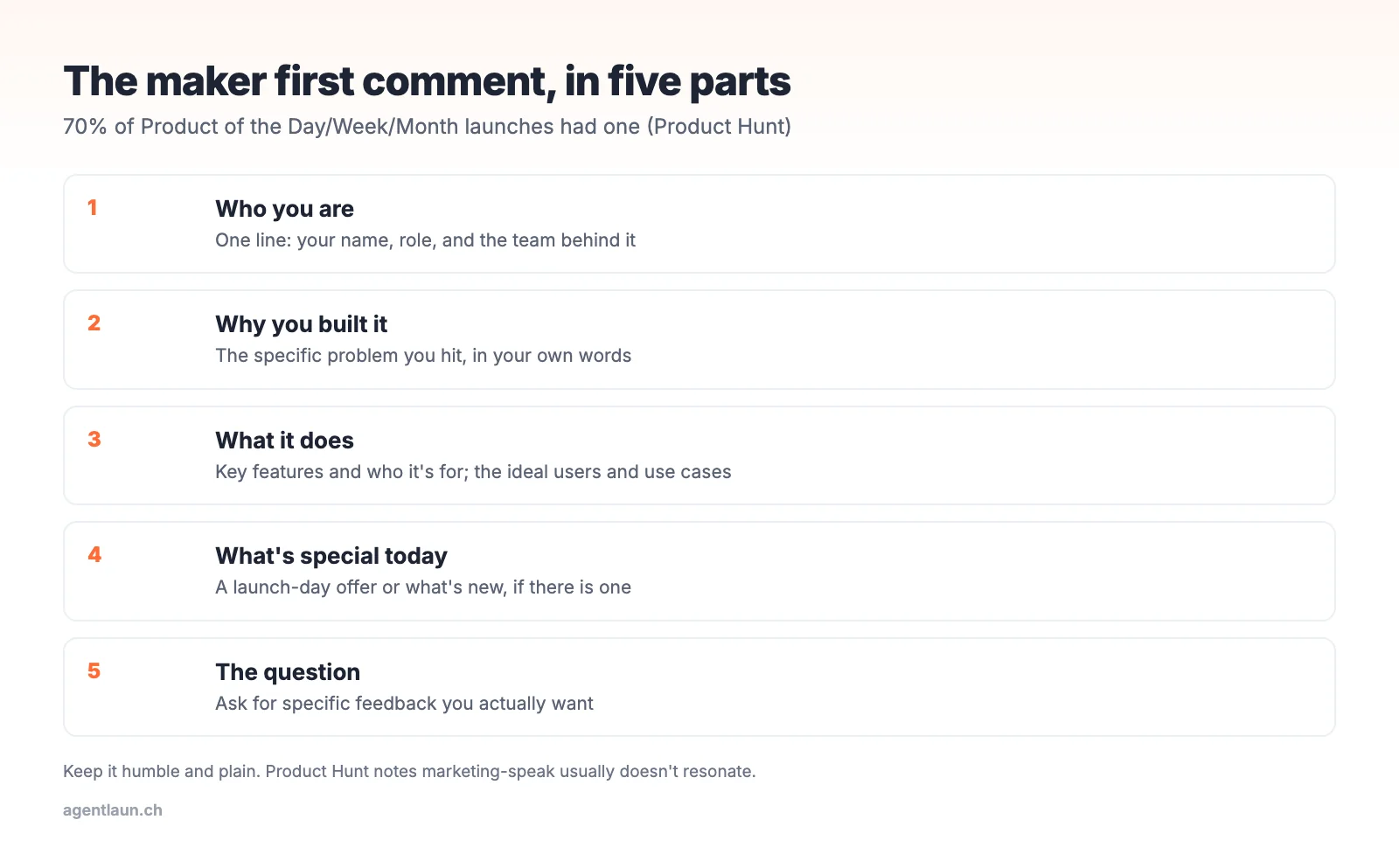
The template
Hey Product Hunt 👋 I'm [name], [role] at [product]. [One line on the team.]
Why we built it: [The specific problem you hit. One or two sentences, in your own voice.]
What it does: [Product] helps [who] [do what]. The things people use most:
- [Feature 1 and its outcome]
- [Feature 2 and its outcome]
- [Feature 3 and its outcome]
For launch day: [offer, free tier, or what's new], if any.
We'd love your feedback on: [one specific question].
I'll be here all day answering questions.
Example: a B2B SaaS
Hey Product Hunt 👋 I'm Sam, one of two founders of Ticketnote.
Why we built it: after every sprint planning we spent 40 minutes turning meeting notes into Jira tickets. We automated it for ourselves, and three teams asked to use it.
What it does: Ticketnote turns meeting notes into Jira tickets with assignees and estimates. It works with Google Docs and Notion, keeps a human approval step, and never posts tickets without review.
For launch day: free for teams under 5 people, permanently.
Feedback we want: would you trust auto-assigned owners, or should it only suggest them?
Example: a developer tool
Hi everyone, I'm Priya. I built Driftless on weekends over the last six months.
Why: our staging environment drifted from production every few weeks, and nobody noticed until a deploy broke.
What it does: Driftless diffs live infrastructure against your Terraform and posts drift to Slack. It's a single binary, runs in CI, and the core is open source.
Question for you: which clouds should we support after AWS and GCP?
What Product Hunt recommends
Product Hunt's launch guide suggests including key features and who it's for: ideal users and use cases, and advises:
- Tone: "being humble and helpful is the best tone. Marketing-speak doesn't usually resonate very well."
- Simple language, and "make sure to highlight who the product is for".
- Co-makers can comment too, but you're only prompted for the first comment at submission. Later comments get added once the product is live.
Why the comment thread matters: the numbers
Product Hunt's own figure is that 70% of products that reached Product of the Day, Week or Month had a first comment from the maker. Our leaderboard data shows why the conversation that follows matters just as much.
Across 30 days of Featured launches (5 September to 4 October 2026, 459 launches):
| Median comments | |
|---|---|
| #1 of the day | 61 |
| Top 5 of the day | 32 |
| Everyone else | 8 |
The top five each day had four times the comments of the rest. A first comment that ends with a real question is how you start that thread, and replying to everyone is how you keep it going.
A third example: a consumer app
Hi Product Hunt 👋 I'm Priya, and I built Pantry because my partner and I kept buying a third jar of cumin.
What it does: snap a photo of your shelf and Pantry keeps a running list of what you have, so the shopping list writes itself.
Who it's for: households who cook a lot and hate food waste. It works offline, and nothing leaves your phone.
Launch day: the first 500 people from Product Hunt get the annual plan at half price.
My question: what's the one thing you always forget you already have? I'm using the answers to train the next version.
It's personal, specific about the job, clear on privacy (a common objection for consumer apps), and the question is easy and fun to answer.
Before you post: a checklist
- Under about 250 words, in short sections
- Your name and role in the first line
- The problem in one or two sentences, from your own experience
- What it does and who it's for, in plain words
- Anything special for launch day (a discount, a free tier, an extended trial)
- One specific question
- No upvote request, no landing-page copy, no wall of features
- Posted within minutes of going live, ideally at 12:01 AM Pacific
Mistakes to avoid
- Asking for upvotes. Product Hunt's only real promotion rule is that you can't ask people to upvote. Ask for feedback instead.
- Pasting your landing page copy. It reads as an ad.
- A wall of text. Keep it to about 150–250 words with short sections.
- No question. A specific question gives people a reason to comment, and the top five each day had four times the comments of everyone else.
- Posting it hours late. Early visitors arrive to an empty thread. Post the comment the moment the launch is live.
- A discount nobody can find. If you mention a launch offer, say exactly how to get it.
- Letting only the founder reply. Co-makers should answer too, from their own accounts.
Where the first comment appears
Adapting it to your situation
- Solo founder: lean into it. "I built this alone over six months" is a strength on Product Hunt.
- Relaunch: open with what changed since the first launch and why (relaunch rules).
- Open source: link the repo and say what kind of contributions you want.
- B2B tool: name the role it's for ("for RevOps leads at 20–200 person companies"), because Product Hunt's audience is broad.
Replies matter as much as the first comment
The first comment starts the conversation. Your replies keep it going. Answer every comment specifically, thank critics, and when someone points out a bug, say when it'll be fixed. Co-makers should reply too, from their own accounts.
Related
- How to write a Product Hunt tagline
- Product Hunt launch without an audience
- What to do after a Product Hunt launch
- How to launch on Product Hunt
FAQ
Does the first comment matter on Product Hunt? Yes. Product Hunt says 70% of Product of the Day, Week or Month winners had a maker first comment.
How long should a Product Hunt first comment be? About 150–250 words: who you are, why, what it does, launch-day info, and one question.
Can I ask for upvotes in my first comment? No. Product Hunt doesn't allow asking for upvotes. Ask for feedback and comments.
How many comments do top Product Hunt launches get? Over 30 days of daily leaderboards in September and October 2026, #1 of the day had a median of 61 comments and the top five a median of 32. Everything below the top five had 8.
When should I post the first comment? Immediately after the launch goes live, ideally at 12:01 AM Pacific, so the first visitors see it.