Vibe coding growth guidesSaaS launch and marketing
Lovable Growth Tools vs Replit Growth vs Bolt SEO: What Each Does and Where to Take Over
A sourced comparison of Lovable Growth tools, Replit's SEO Agent and Growth pane, and Bolt's SEO boosting, then a step-by-step plan for the jobs none of them do.
 By Pruthvi RajNovember 23, 2026
Lovable growth tools find places to market your app and draft the posts, but you still publish and submit them yourself.
Quick answer:
- Lovable Growth tools: find places, draft copy, run ads. You post and submit.
- Replit Growth pane: technical SEO fixes and traffic. No outreach, no listings.
- Bolt: prerendering, an SEO/GEO skill and basic analytics.
- None of the three submits your app to directories or builds backlinks.
Lovable launched Growth tools on 14 October 2026, on all plans. The only things it pushes live for you are ads and Google Business Profile updates, after you approve.
Replit's SEO Agent and Bolt's SEO boosting stop earlier. They fix how crawlers read your app, and neither looks for places to list it. So the real question is which jobs each covers, and where you take over.
What you'll need
| What | Time | Cost |
|---|---|---|
| A published app | Done already | Hosting included |
| Lovable, any plan | 15 min for a first plan | Normal credit use |
| Replit paid plan for SEO Agent | 10 min per scan | Core listed at $20/month |
| Bolt Pro for SEO boosting | None | Listed at $25/month |
| Google Search Console | 10 min | Free |
| A custom domain | 30 min to a few hours | Domain fee |
| A listing tracker | 10 min | Free |
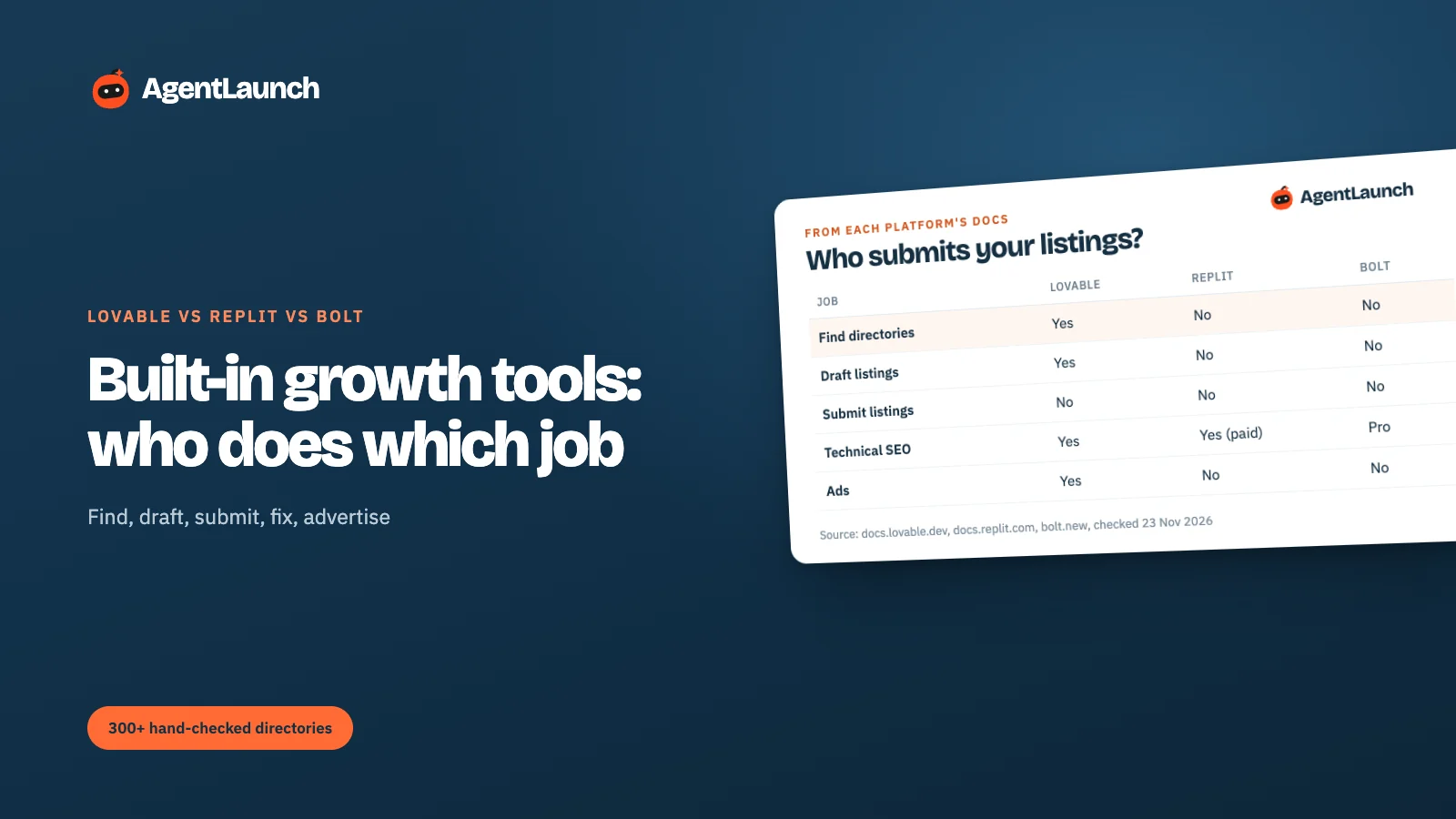
Lovable growth tools vs Replit Growth vs Bolt: who does which job
| Job | Lovable Growth tools | Replit and Bolt |
|---|---|---|
| Find directories and communities | Yes, by name | No |
| Draft posts and listings | Yes | No |
| Submit directory listings | No | No |
| Technical SEO fixes | Yes, one click | Yes |
| Google Search Console | Built-in connector | Add it yourself |
| Keyword research | Semrush data in chat | No |
| Build backlinks | No | No |
| Run ads | Google and Meta | No |
| Track traffic | Yes, all plans | Yes, Bolt on paid plans |
Each row comes from the platforms' own docs, linked below.
What Lovable Growth tools do
Lovable shipped this in two parts. Discoverability came on 13 May 2026: server rendering for new apps, prerendering for older ones and an SEO review with Semrush data.
Growth tools followed on 14 October 2026, per Lovable's changelog. You set a goal like your first 100 signups, and Lovable turns it into a plan from your app, audience and traffic.
The Growth tools docs list eight capabilities.
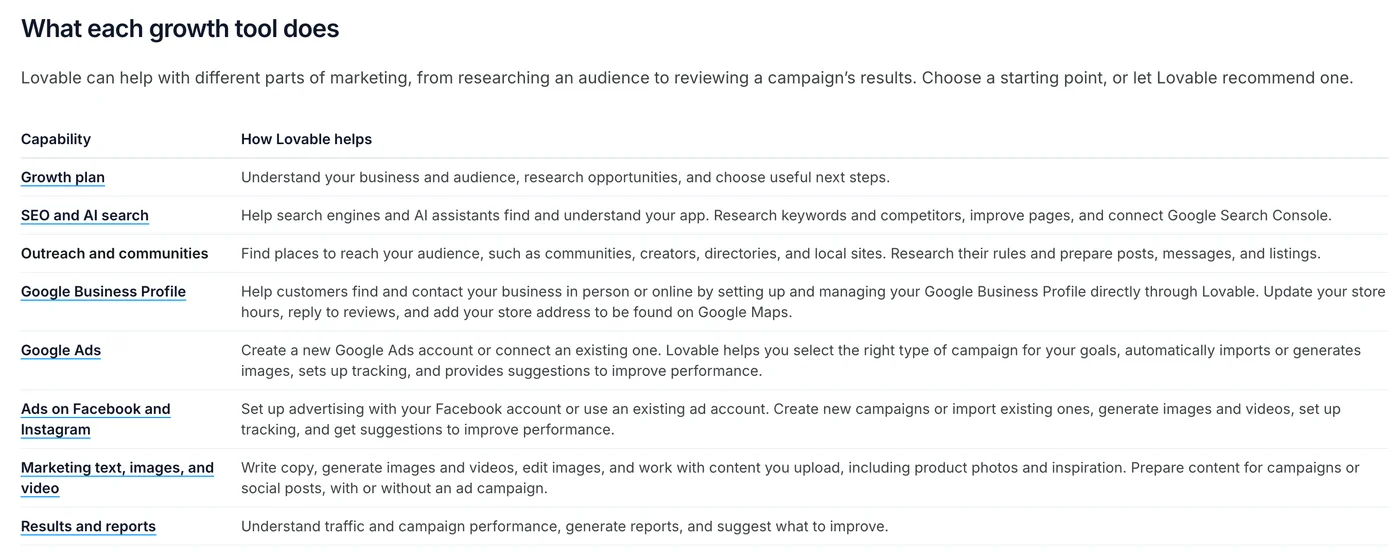
The row that matters for directories is Outreach and communities. It finds communities, creators, directories and local sites, researches their rules, and prepares posts and listings.
Prepare, not submit. The Grow page puts it simply: "Lovable drafts the posts and profiles, and you publish them from your own accounts."
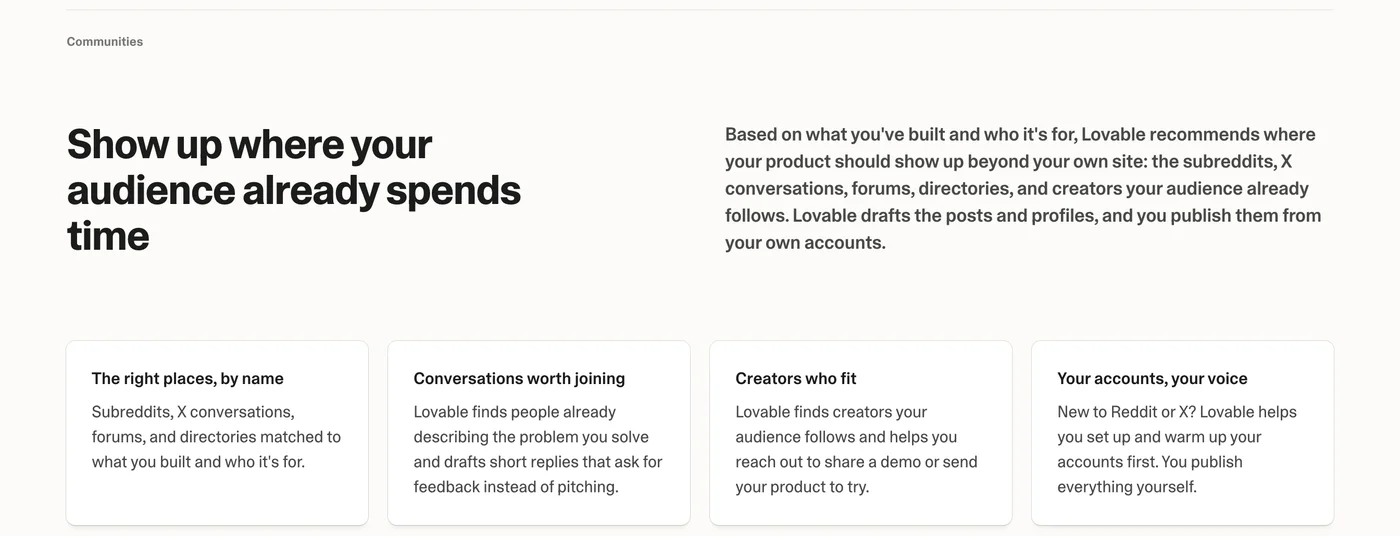
Lovable does publish ads and Google Business Profile updates, both after you approve.

Lovable adds no extra fee for Growth tools. Chat uses credits as usual, and Google or Meta bill your ad account directly.
It won't run email campaigns or referral programs. Its SEO review also doesn't fully judge backlink quality.
What Replit's SEO Agent and Growth dashboard do
Replit announced SEO Agent on 3 June 2026. It lives in the Growth pane, which unlocks once you publish.
Per the SEO Agent docs, it audits robots.txt, sitemap.xml, metadata, structured data, Open Graph tags and semantic markup. Each finding becomes a one-click fix.
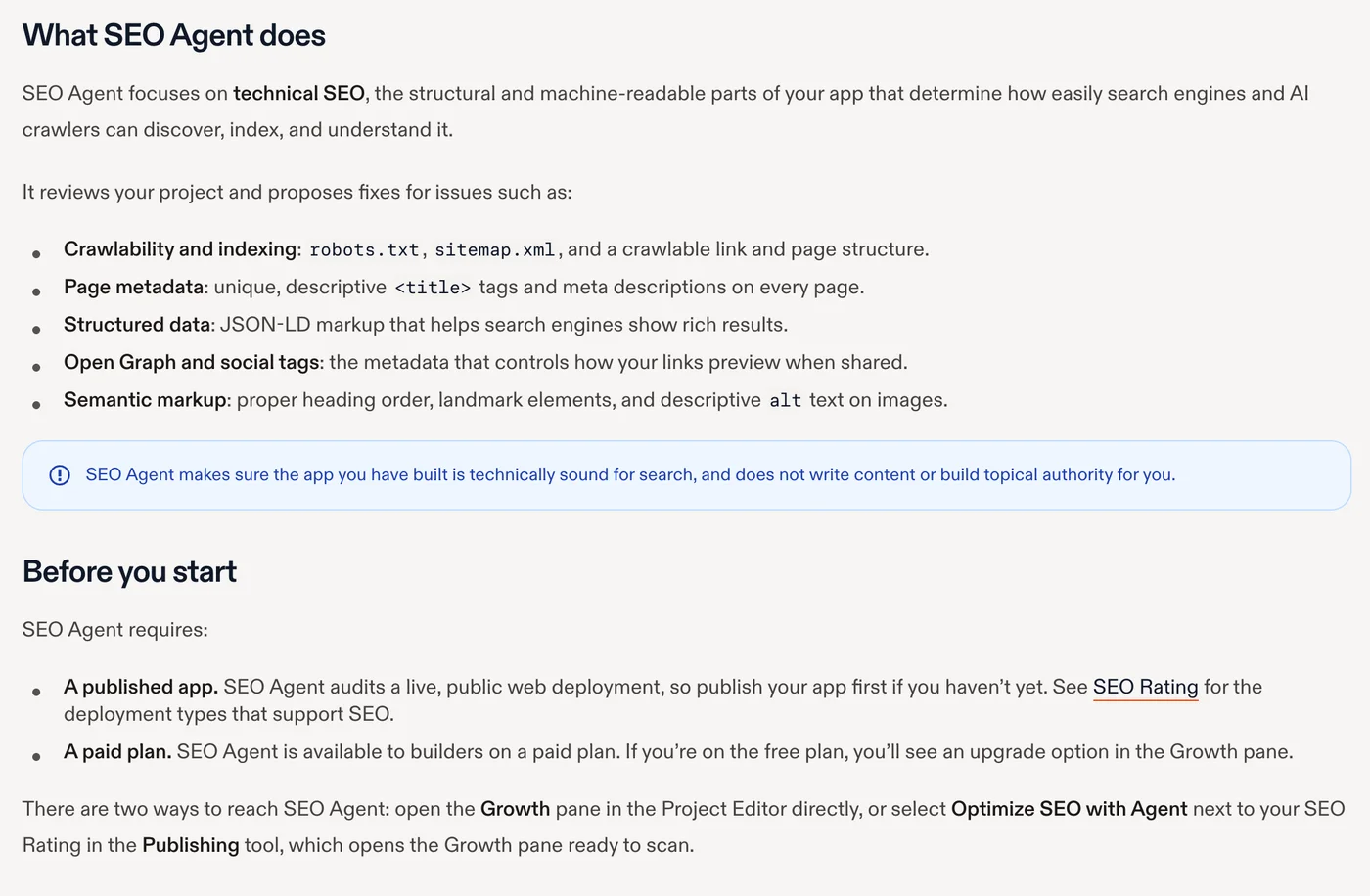
Replit is upfront about the limit. SEO Agent doesn't write content or build authority, and earning links from other sites is left to you.
The rest of the pane is Project Analytics: visitors, top pages and referrers for up to 30 days. Custom events need a paid plan. Every publish also triggers an SEO Rating of Healthy, Needs Work or Weak.
Replit also has a separate Growth Kit of skill files that Replit Agent runs against your app.
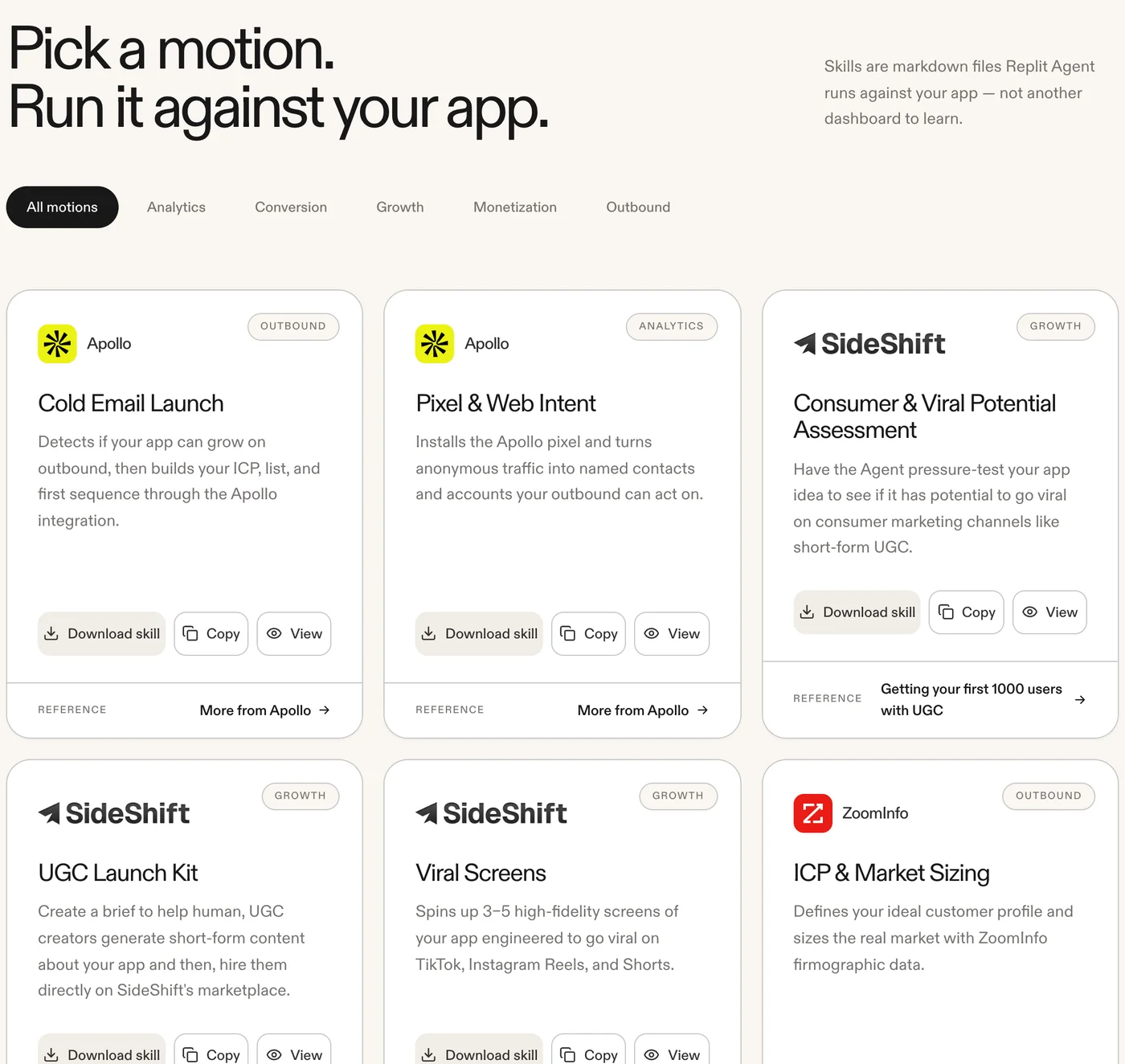
The skills cover cold email, market sizing, UGC creator briefs, funnels and pricing. None of the 18 is about directories, launch platforms or backlinks.
What Bolt's SEO boosting does
Bolt has no growth pane. Its pricing page lists SEO boosting and custom domains on Pro.
Bolt's help center doesn't define SEO boosting. The closest is the Bolt Cloud launch post from August 2025, which promised automatic SEO pre-rendering. That means crawlers get HTML instead of an empty shell.
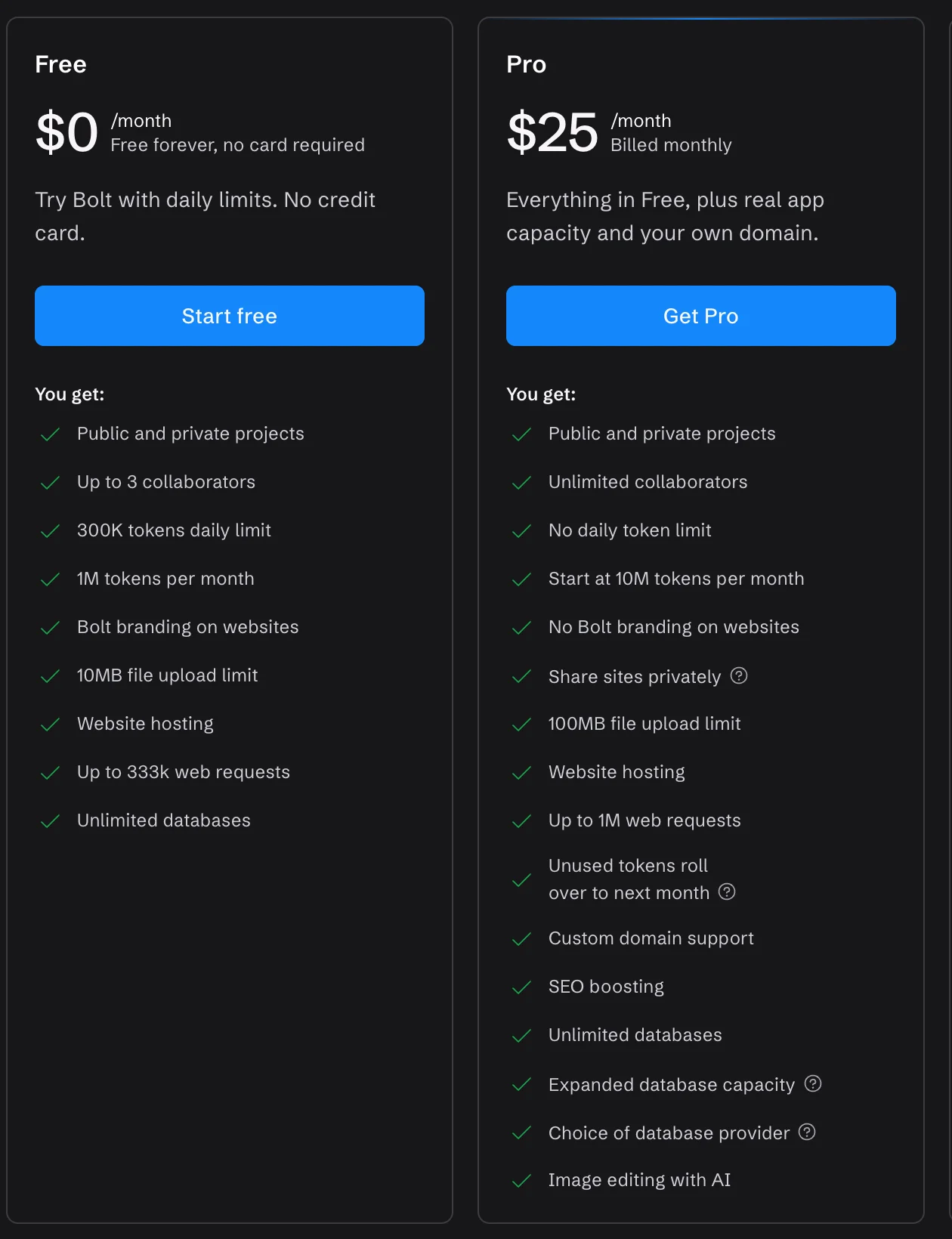
Bolt adds two more SEO pieces:
- An SEO/GEO skill, added in July 2026 and off by default. Turn it on per project.
- Built-in SEO prompts in the Prompt Library.
Paid plans get hosting analytics for up to 30 days, but Bolt warns the numbers include bots. Nothing in its help center covers Search Console, directories or outreach.
The gap: directory submissions
None of the three platforms submits anything to a directory. That's the job a directory agent covers.
AgentLaunch is one example. You open its kit in Claude Code, Codex or Cursor, and it submits your product to 300+ hand-checked launch platforms and directories in a real browser. It writes copy per site, stops for CAPTCHAs, payments and 2FA, and tracks each listing.
It doesn't do ads, social posts or on-site SEO. So it sits next to Lovable Growth tools, not in place of them.
Step 1: Fix the technical base on your platform
Do this first on any platform. A listing that sends Google to an unreadable page wastes the link.
- Lovable: open More → SEO & AI search, run the review and click Try to fix on failing findings. Publish, then Scan again. Connect Search Console from the Google searches card, and Lovable verifies the site and submits the sitemap. Our Lovable SEO guide covers each finding.
- Replit: open Tools → Growth and click Run scan with Agent. Apply the fixes, republish and check the SEO Rating. Then add Search Console yourself. See the Replit SEO guide.
- Bolt: on Pro, SEO boosting covers rendering. Click your project name, then Skills, and turn on SEO/GEO. Ask Bolt for a sitemap,
robots.txtand page titles. See our Bolt.new SEO guide.
On all three, connect a custom domain before you list anywhere. Changing domains later means updating every listing.
Step 2: Ask Lovable Growth tools for a growth plan
In the project chat, ask something plain like "How can I get more people to use my app?". Or open More → Analytics and click Get more visitors to send your traffic along.
Lovable researches competitors and where your audience spends time, asks follow-up questions and proposes an order of moves. Research and drafts are saved in the project's Files view.
For a new app, expect foundations before ads. Lovable's Grow page says it knows when to say not yet on ads.
On Replit or Bolt there's no equivalent planner. You can run a Growth Kit skill or prompt either agent for a launch plan, but neither names directories.
Step 3: Get the directory shortlist, then check it
Ask Lovable directly: "List the directories, subreddits and forums where my app should be listed, with each one's rules." It returns places by name.
The drafts don't vet each site, so check three things yourself:
- Does it accept your URL? BetaList requires your own domain and refuses free-host subdomains.
- What does it cost? Many launch platforms are paid or have long free queues.
- What link does it give? Dofollow, nofollow or none.
You can check which directories fit your app with our free tool, or browse launch platforms with DR, cost and link type.
The AgentLaunch catalog shows the spread. Of 352 directory profiles, 215 give a dofollow link, 78 nofollow, 59 are paid only and 56 show a CAPTCHA.
Step 4: Take over the submissions
This is where every built-in tool stops. You have three ways to finish.
- Submit by hand. Use Lovable's drafts as the base and fit them to each form's limits. Expect separate accounts, email confirmations and uploads per site. Our guide on where to submit a vibe-coded app lists the sites to do first.
- Hand it to an agent. Past 20 or 30 sites, an agent that fills forms saves the most time. Our write-up on automated directory submission compares the options.
- Track every listing. Log the URL, status, date and link type. None of the three platforms records this.
Step 5: Post the community drafts yourself
Lovable drafts replies that ask for feedback instead of pitching, and helps new accounts warm up first. Post them yourself, one community at a time.
Follow each subreddit's self-promotion rules. Our list of the best subreddits to promote your app shows which allow it.
Step 6: Decide on ads
Only Lovable runs ads from the editor. It sets up tracking, drafts the campaign and waits for your approval before anything spends. On Replit and Bolt you'd use Google Ads or Meta yourself.
Our take: skip ads until free channels show which message gets clicks. Lovable's docs say it may suggest fixing your offer or website first.
Step 7: Track what each channel sends
Read traffic where you built:
- Lovable: More → Analytics, with channels and Search Console clicks.
- Replit: the Growth pane.
- Bolt: Project settings → Analytics.
Directory traffic shows under referrers on all three. To tie listings to signups, add UTM tags where a directory allows them. Our guide on measuring directory referral traffic explains how.
Common mistakes
- Treating a Lovable draft as a done listing. It's text in your Files view until you submit it.
- Listing before a custom domain. You'll update every profile later, and BetaList won't take a subdomain.
- Assuming Replit's SEO Agent builds authority. Its docs say it doesn't.
- Reading Bolt's analytics as people. They include bots.
- Running ads with no tracking. Lovable warns against it, and so do we.
- Not tracking listings. No built-in tool keeps that record.
What results to expect
Technical fixes show up fast in the tools. Search results take longer, and Lovable says visibility can keep improving over weeks or months.
Directories are modest traffic sources. In one Indie Hackers report, 89 live listings sent 171 of about 3,300 sessions and 2 attributed signups.
Their value is mostly links and being findable. That's the job none of the built-in growth tools does.
FAQ
What are Lovable growth tools?
Features in the Lovable chat, launched 14 October 2026, that plan your growth, find places to post, draft listings and run Google and Meta ads after approval. They're on all plans with no extra fee beyond credits.
Do Lovable growth tools submit my app to directories?
No. Outreach posts and messages are drafts for you to publish or send. Lovable only publishes ads and Google Business Profile updates.
What does Replit's SEO Agent do?
It scans your published app for technical SEO issues and applies one-click fixes. It needs a paid plan and doesn't write content or build authority.
Where is the Replit growth dashboard?
In the Project Editor under Tools → Replit Cloud → Growth. It unlocks after you publish and holds the SEO Rating, SEO Agent and Project Analytics.
What is Bolt SEO boosting?
A Pro plan feature. Bolt doesn't define it in its help center, but its Bolt Cloud launch post describes automatic SEO pre-rendering.
Which is better for growth, Lovable or Replit?
For finding places to market an app, Lovable, because it drafts outreach and runs ads. For submitting listings and building links, neither: you or an agent do that part.