Vibe coding growth guidesSaaS launch and marketing
How to Sell a Vibe-Coded App: Sell Access or Sell the App Itself (2026 Guide)
Two ways to make money from an app you built with AI: charge users through Stripe, Paddle or the app stores, or sell the whole app on a marketplace. Real fees for each.
 By Pruthvi RajNovember 23, 2026
Here is how to sell a vibe-coded app: sell access to it first, then sell the app itself on a marketplace once it makes money.
Quick answer:
- No revenue yet? Sell access first: a price, a payment link, 10 customers.
- Stripe takes 2.9% + 30¢ per US card payment. Paddle takes 5% + 50¢ and handles sales tax.
- The App Store takes 15% for small developers. Google Play takes 10% plus a 5% billing fee on your first $1M.
- To sell the app itself, expect 6–10% marketplace fees and buyers who check revenue, code and security.
Marketplaces want revenue. Acquire generally lists only startups that make money, and Microns won't take pre-revenue projects at all. So a few paying customers come before an exit.
How to sell a vibe-coded app: what you'll need
| What | Time | Cost |
|---|---|---|
| App on your own domain | 1 hour | Domain fee |
| Privacy, terms and refund pages | 1–2 hours | Free |
| Stripe or Paddle account | 30 minutes | Per-sale fees only |
| Code in a GitHub repo you own | 15 minutes | Free |
| 3–12 months of revenue records | Ongoing | Free |
| Marketplace account, if selling the app | 1–2 hours | Listing or success fee |
Step 1: Decide whether you're selling access or the app
| Sell access | Sell the app | |
|---|---|---|
| You get | Recurring or one-time revenue | A lump sum |
| Works with zero revenue? | Yes | Rarely |
| Main cost | Card fees, or 15%+ in app stores | 6–10% success fee |
Be realistic about an app without traction. Acquire's seller FAQ says most pre-revenue startups don't get much buyer interest. Its rare exceptions need a SaaS model, an asking price under $25,000 and active customers.
Indiemaker, a new marketplace for small exits, shows the rest of the market on its homepage.
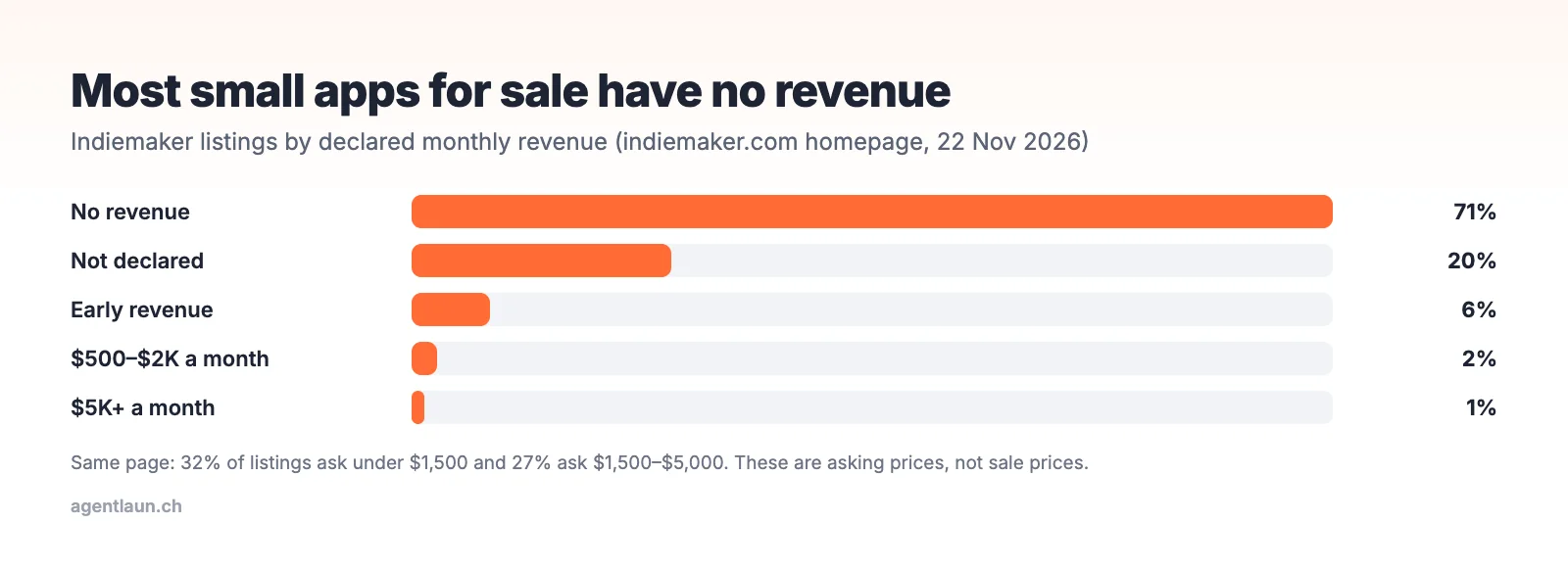
Those are asking prices, not sale prices. They still show what a buyer sees: lots of apps, few with revenue. Revenue is what sets yours apart.
Step 2: Price your app before you add payments
If you want to know how to monetize a vibe-coded app, start with the price, not the provider.
- Charge more than feels safe. YC partner Kevin Hale calls undercharging the number one pricing mistake. His rule: price at about a tenth of the value you create, raise 5% at a time, and stop when you lose about 20% of deals.
- Subscription for ongoing value, one-time for a finished tool. A calculator can sell once. Anything with hosting, AI calls or stored data needs recurring revenue to cover its costs.
- Lifetime deals buy cash and early users, not a business. Our guide on where to sell a SaaS lifetime deal compares the platforms.
Our guide on how to get your first 10 customers covers early pricing in more depth.
Step 3: Pick a payment provider
Stripe
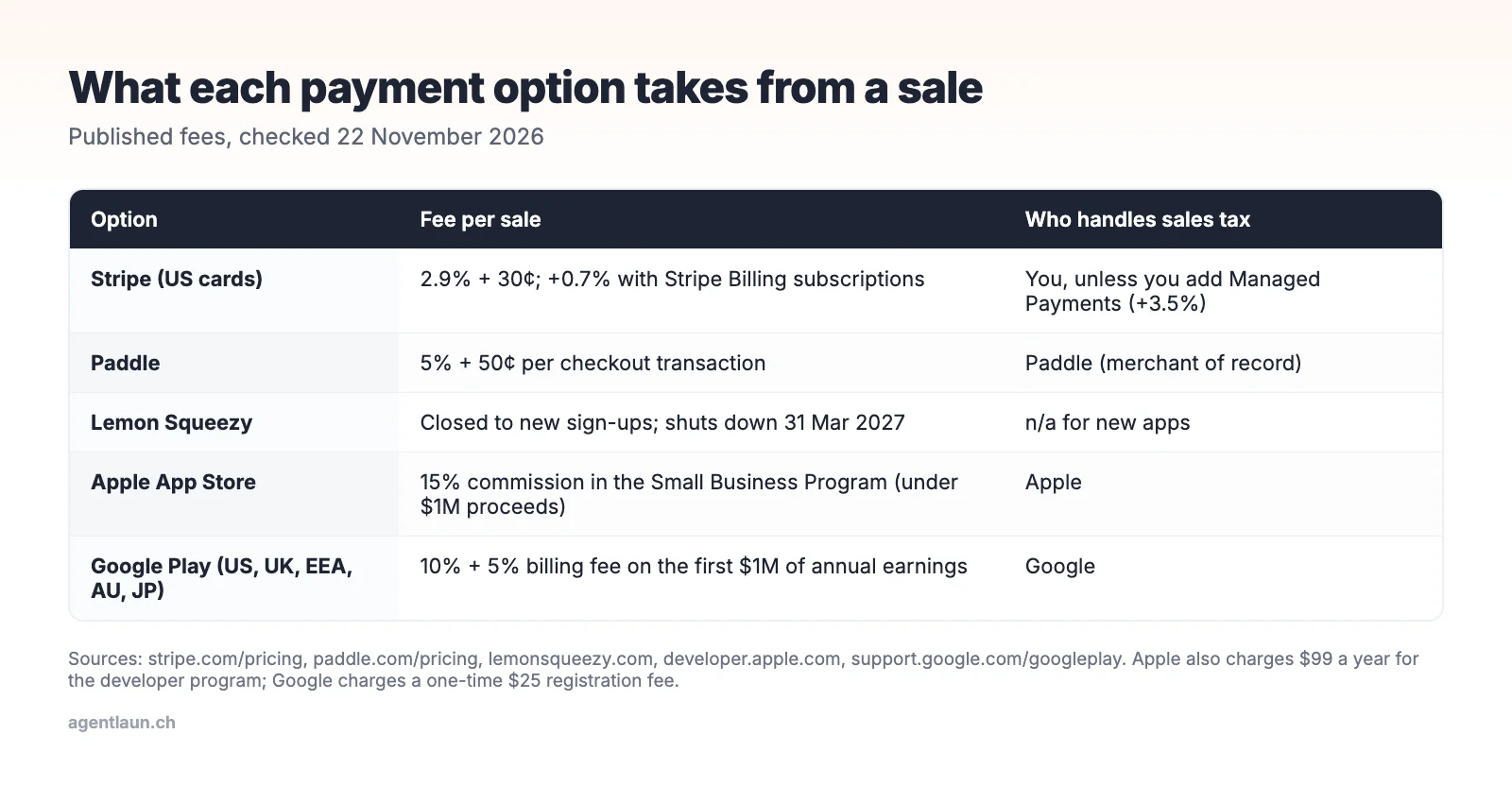
Stripe's US pricing is 2.9% + 30¢ per domestic card payment. International cards add 1.5%, and currency conversion adds 1%. Subscriptions run on Stripe Billing at 0.7% of volume.
With plain Stripe you are the seller, so sales tax and VAT are on you. Stripe Managed Payments handles tax in more than 80 countries for an extra 3.5% per sale.
Paddle
Paddle charges 5% + 50¢ per transaction with no monthly fee. It is the legal seller, so it calculates, collects and pays the tax for you.
Avoid Lemon Squeezy
Don't pick Lemon Squeezy for a new app. Its 2026 update says it no longer accepts new sign-ups and shuts down on 31 March 2027. Its own CEO points users to Stripe Managed Payments.
Add payments with your builder
- Lovable: Paddle and Stripe are built in for subscriptions and one-time payments. Live checkout stays off until you pass the go-live checklist. For Paddle, Lovable checks your site for privacy, terms and refund pages.
- Bolt, Replit, v0, Cursor or Claude Code: ask the agent for Stripe Checkout or Paddle checkout, a webhook that marks the user as paid, and a customer portal link. Test the whole flow in test mode first.
- No code at all: a Stripe payment link works for your first customers. Create it in the Dashboard and paste it into an email.
Step 4: Where to sell an app: web, App Store or Google Play
Selling on the web through Stripe or Paddle costs the least per sale. The app stores cost more but bring their own buyers and checkout.
Apple App Store
Apple's developer program costs $99 a year. Under the App Store Small Business Program, you pay 15% if you're new or made up to $1 million last year. Pass $1 million and the standard rate applies.
Google Play
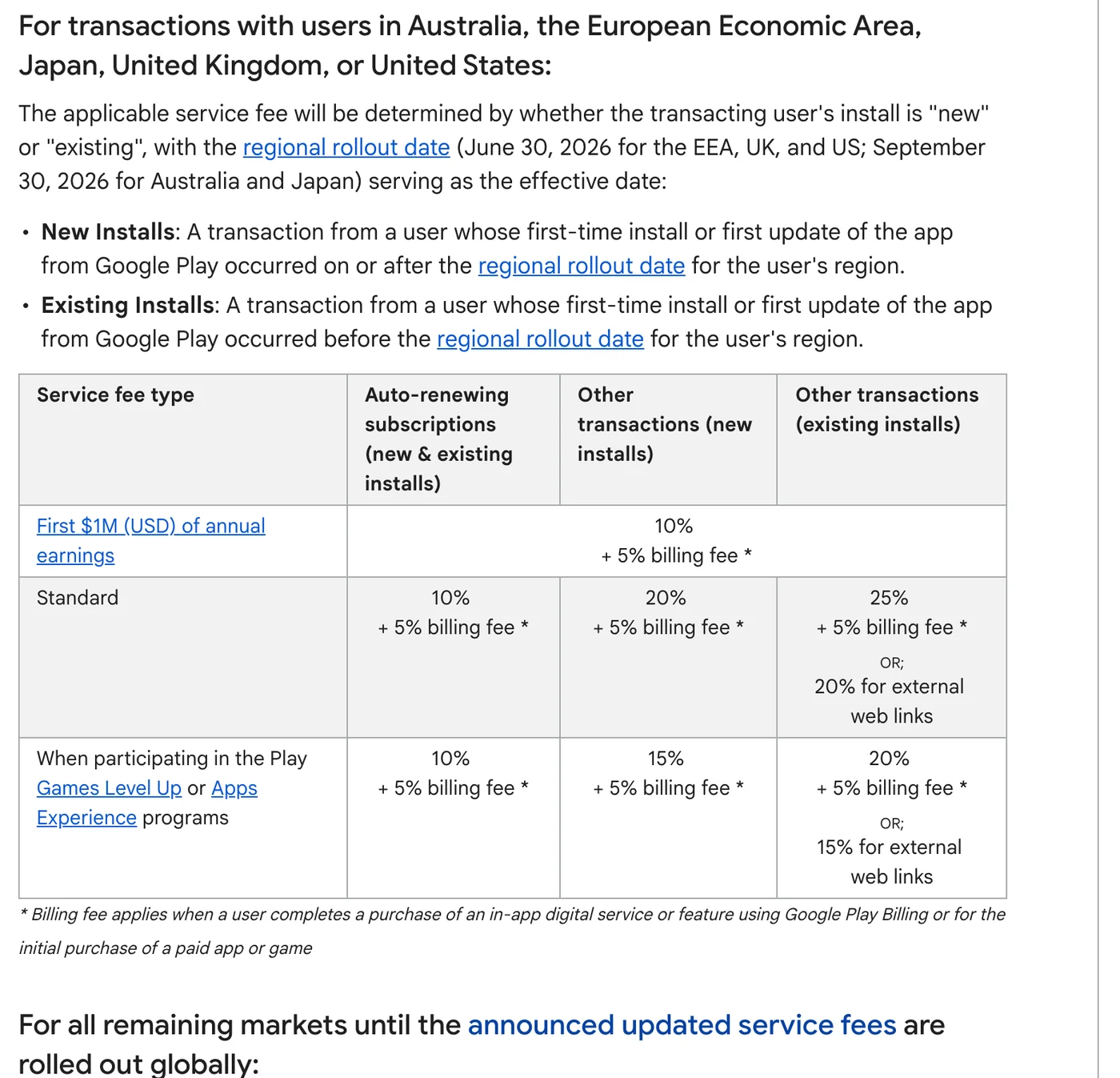
Google Play charges a one-time $25 registration fee. In Australia, the EEA, Japan, the UK and the US, its new service fees are 10% plus a 5% billing fee on your first $1M a year.
Above $1M, subscriptions stay at 10% + 5%. Other purchases from new installs go to 20% + 5%. Elsewhere, the old 15% tier applies until the new fees roll out.
If you built a web app with Lovable, Bolt or v0, you don't need the stores. Go there only if your buyers expect a mobile app.
Step 5: Get your first sales
A payment link nobody sees sells nothing. Our vibe-coded app marketing guide is the full 30-day plan. The short version:
- Message your most active free users and offer a founding price.
- Post in communities where your buyers ask for help, as a member first.
- List the app on launch platforms and directories so people searching can find it.
Our list of where to submit a vibe-coded app ranks the options. The launch platforms hub shows link type and cost for each.
AgentLaunch is an AI agent you run from Claude Code, Codex or Cursor. It submits your app to hand-checked directories in a real browser, writes the copy and tracks every listing. You can check which directories fit your app for free first.
For what selling access can turn into, see our roundup of vibe-coded apps that make money.
Step 6: Get the app ready for buyers
Once the app earns money, you can sell the app itself. Buyers look at four things.
Revenue records
A Flippa director says in its H1 2026 report that buyers want twelve months of clean financials before a call. Flippa's brokered service needs 12 months of trading history. Microns wants projects at least 5 months old with paying customers.
Keep Stripe or Paddle exports, not screenshots.
Code you can hand over
Buyers want a repo, not a login to your builder. Lovable supports export and two-way sync with GitHub.
Whatever you built with, add a README with setup steps, list every environment variable, and move secrets out of the code.
Security of AI-generated code
Buyers ask how the code was made, and they have reason to. Veracode's Fall 2026 test of 18 models found an average security pass rate of 62%.
Lovable has its own history. CVE-2025-48757 describes a weak Row-Level Security policy in Lovable through 15 April 2025, letting attackers read or write tables. Lovable disputes it, saying each customer must protect their own data.
Supabase's docs say to enable RLS on every exposed table. Before listing, check RLS, run a security scan, and write down what you fixed.
A list of what transfers
List the domain, hosting, database, payment account, email sender, analytics and social accounts. Buyers price in the work of moving each one.
Step 7: Choose where to sell vibe-coded apps
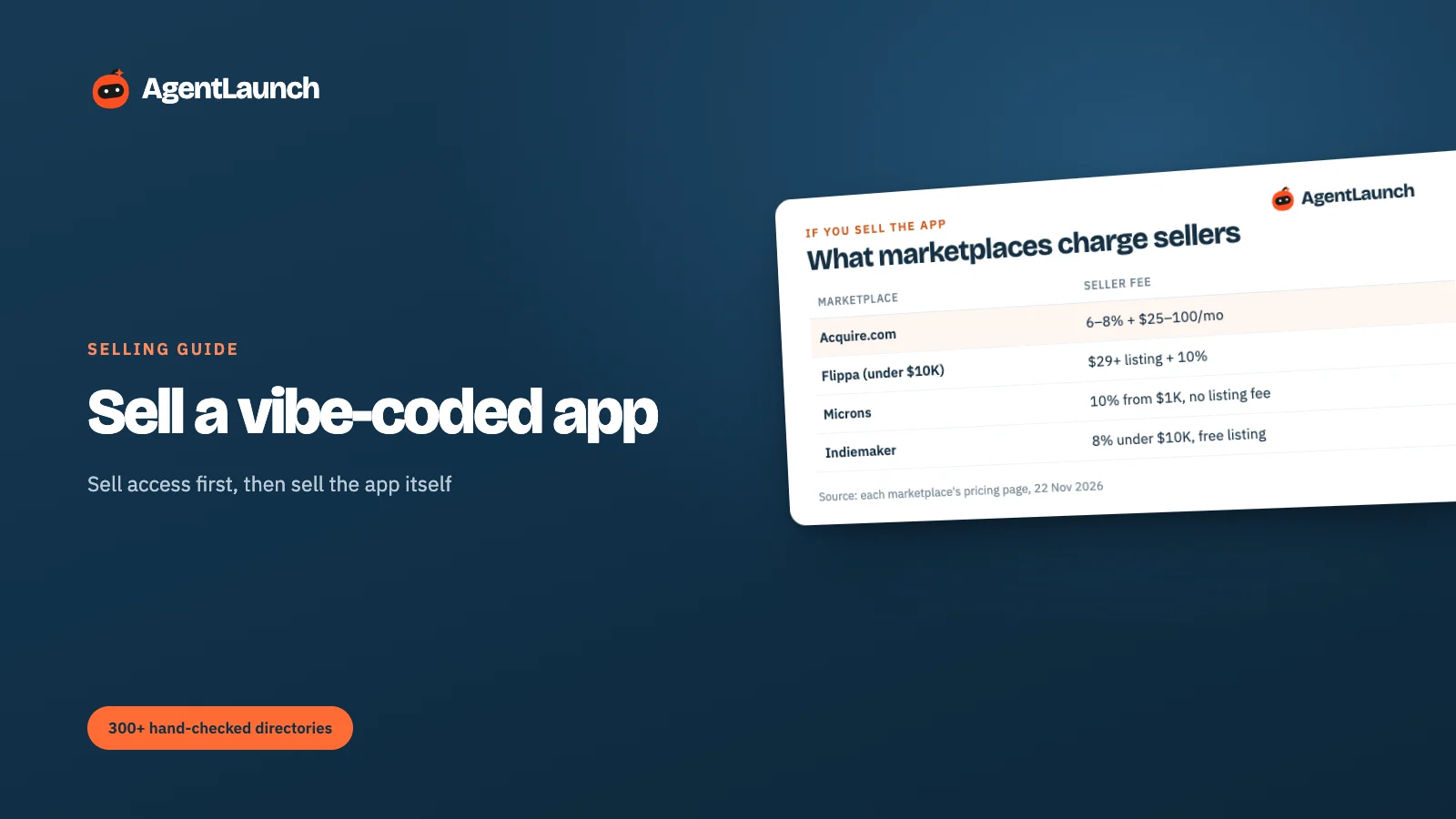
| Marketplace | Seller fees | Who it takes |
|---|---|---|
| Acquire.com | 6–8% at close, plus $25–100 a month | Startups with revenue |
| Flippa, under $10K | $29–199 to list, plus 10% | Most apps |
| Microns | 6–10%, no listing fee | Paying customers, 5+ months old |
| Indiemaker | Free to list, 6–8% | Small projects, even no revenue |
| SideProjectors | Free, no fees | Side projects of any size |
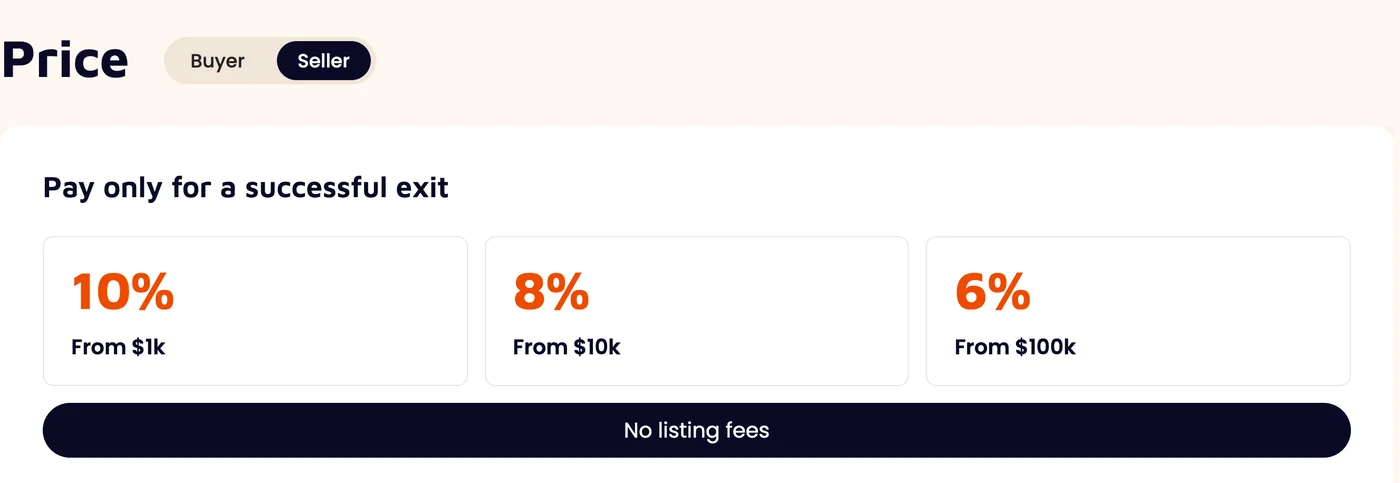
Which one to pick:
- No revenue: Indiemaker or SideProjectors, priced like the asking prices in Step 1. Or keep building revenue.
- Paying customers, under $10K: Flippa's entry listing or Microns.
- Real SaaS revenue: Acquire.com, which says it markets listings to 500k+ buyers.
Step 8: Price the app and close safely
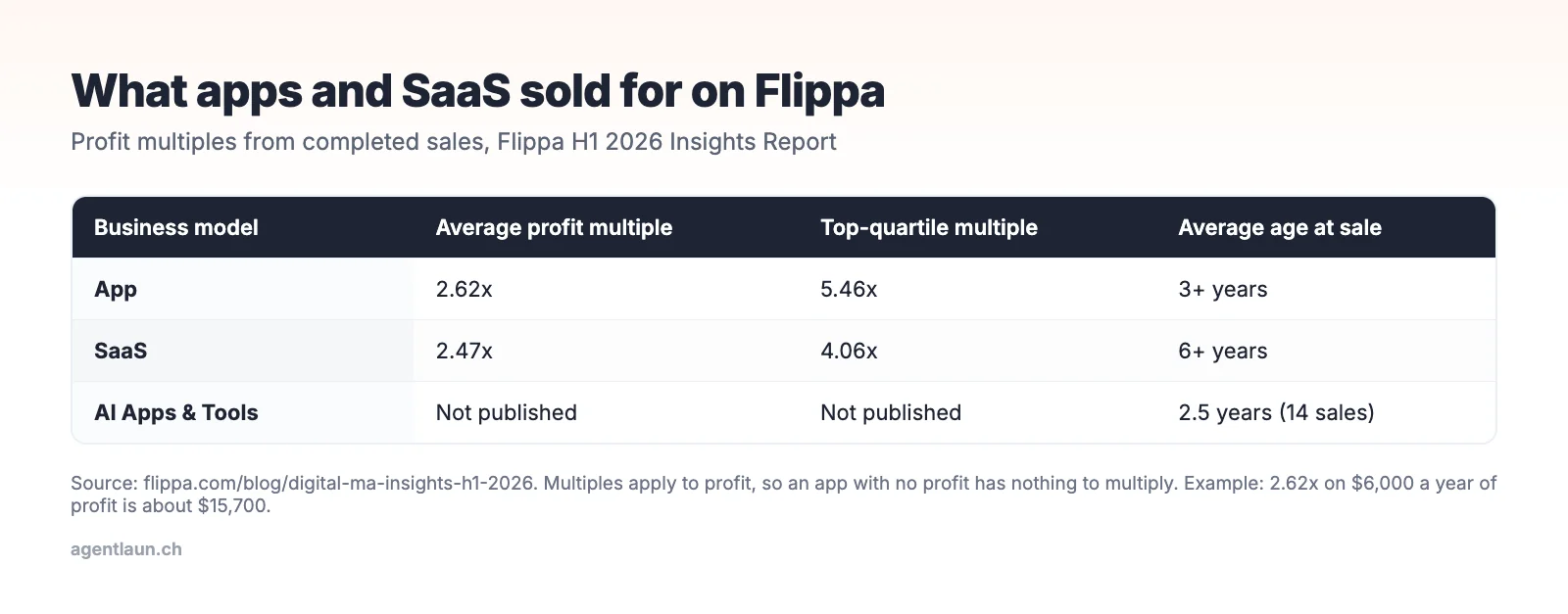
Use published multiples
Flippa's H1 2026 report has the clearest public data. Apps sold at an average 2.62x profit, and SaaS at 2.47x.
Its AI Apps & Tools sales averaged 2.5 years old, so these are established businesses, not weekend builds. For a small app, multiply annual profit by the average: $6,000 a year at 2.62x is about $15,700.
Use escrow
Acquire includes free escrow through Escrow.com. On Flippa, the buyer pays the Escrow.com fees. Never hand over code or accounts before the money is held in escrow.
Transfer the app
- Lovable: Transfer ownership in Project settings moves a project to a workspace member. On Business and Enterprise plans you can send it to an outside Lovable account.
- GitHub: a repo transfer moves issues, pull requests and stars, and redirects old links. It expires if a personal-account recipient doesn't accept within a day.
What results to expect
- Selling access: there's no published benchmark for vibe-coded apps. Plan on finding your first customers by hand.
- Selling with no revenue: Acquire sees little buyer interest, Microns won't list you, and 32% of Indiemaker listings ask under $1,500.
- Selling with profit: apps average 2.62x and SaaS 2.47x annual profit on Flippa, before a 6–10% fee.
Common mistakes
- Listing for sale before charging anyone. Revenue is what buyers pay for.
- Starting on Lemon Squeezy. It no longer accepts new sign-ups.
- Ignoring sales tax. Plain Stripe leaves it with you. Paddle and Stripe Managed Payments handle it for a higher fee.
- Shipping with open database tables. Check RLS before customers, and before buyers check for you.
- Handing over code before escrow. Use the marketplace's escrow every time.
- Pricing on build time. Buyers pay a multiple of profit, not hours spent prompting.
FAQ
Where can I sell a vibe-coded app?
To sell access: your own site with Stripe or Paddle, the App Store or Google Play. To sell the app itself: Acquire.com, Flippa, Microns, Indiemaker or SideProjectors.
Can you sell a vibe-coded app with no revenue?
Yes, but for little. Acquire rarely lists pre-revenue startups and Microns refuses them. On Indiemaker, 71% of listings declare no revenue.
Is selling vibe-coded apps on Reddit a good idea?
Reddit can find you a buyer, but it has no escrow, no verified financials and no transfer process. Move any deal to a marketplace or Escrow.com before anything changes hands.
How much is a vibe-coded app worth?
On Flippa, profitable apps average 2.62x annual profit and SaaS 2.47x. How it was built adds nothing; revenue, profit and clean code do.
How do I monetize a vibe-coded app?
Pick a price, add Stripe or Paddle checkout, and find your first customers by hand. Paddle costs more per sale but handles sales tax.
Do buyers care that an app was built with AI?
They care whether the code is secure and maintainable. Expect them to review the repo and your database rules.