Where to sell a SaaS lifetime deal: AppSumo, 6 alternatives and your own site
Where to sell a SaaS lifetime deal in 2026: AppSumo's 95%/70% split and payout, six live alternatives, self-hosted checkout fees, and when an LTD is a bad idea.
 By Pruthvi Raj
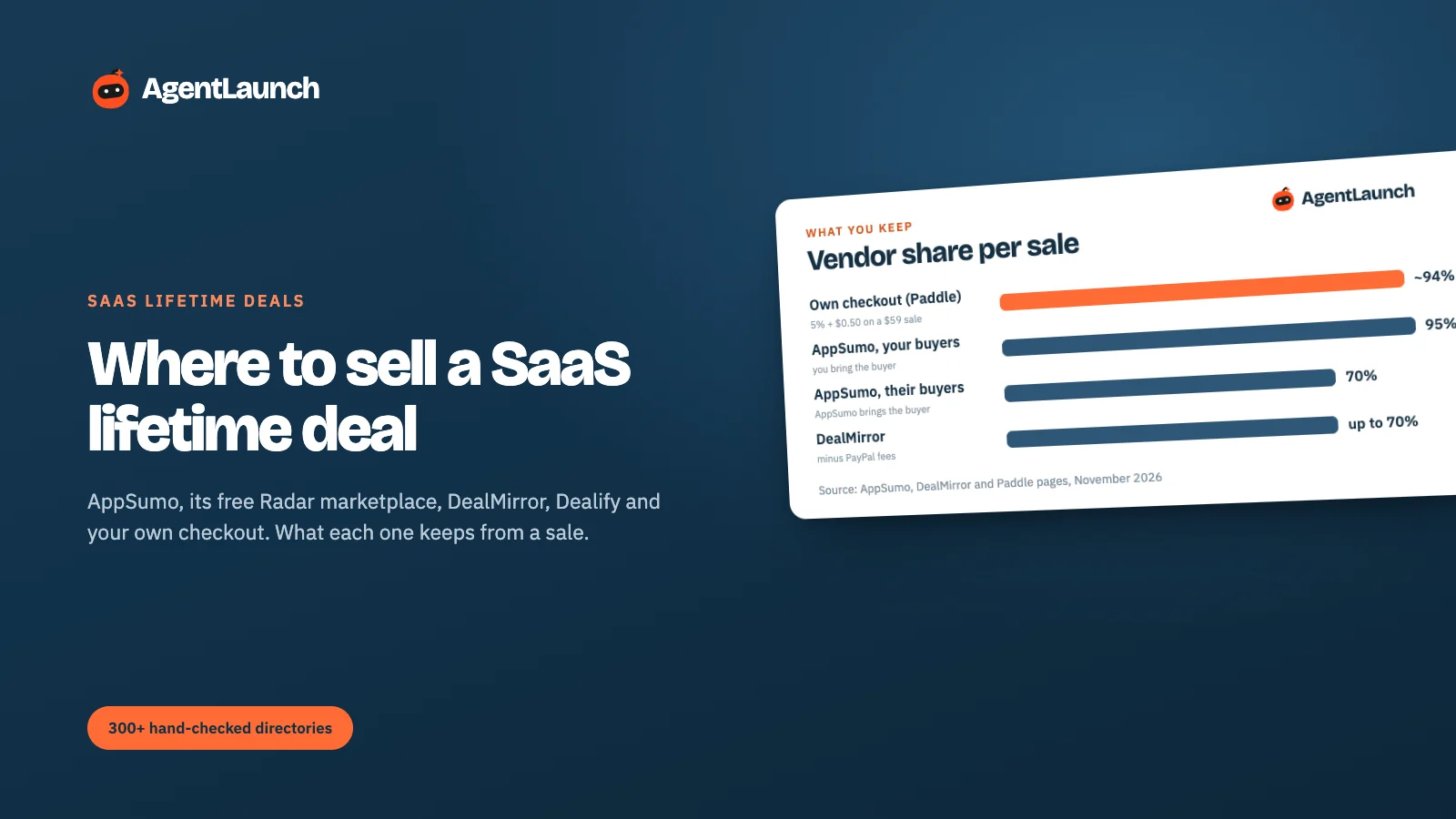
AppSumo is still the biggest place to sell a SaaS lifetime deal: its vendor page says you keep 95% of sales from buyers you bring and 70% from buyers AppSumo brings, paid 60 days after each month ends, and only about 10% of applicants get a featured launch. If you are not accepted, its self-serve Radar listing is free to submit, and Dealify, RocketHub, Prime Club, DealMirror, StackSocial and DealFuel all still run deals as of November 2026. You can also sell the deal yourself through Gumroad or Paddle for a 5% to 10% fee plus 50 cents per sale.
The harder question is whether you should. A lifetime deal brings cash and users fast, but every buyer is a customer you support for years with no recurring revenue. Below: how each platform works for the vendor, what a deal does to MRR and support, how to cap it, and when we would and would not run one.
Where to sell a lifetime deal: the platforms at a glance
We checked every platform's own vendor page on 20 November 2026. "Not published" means the platform does not state the term publicly; you get it in the contract.
| Platform | Model | Who sets the price | Vendor share (published) | Payout | Buyer refund window | How you get in |
|---|---|---|---|---|---|---|
| AppSumo (featured launch) | Curated marketplace, about 60-day campaign | Agreed with AppSumo | 95% from your buyers, 70% from AppSumo's buyers (negotiated by category) | 60 days after each sales month | 60 days | Application, about 10% accepted |
| AppSumo Radar | Self-serve marketplace, lifetime deals only | You, in the listing editor | Not published | Not stated for Radar | 60 days | Free submission, approval in about 9 days (median) |
| Dealify | Curated deal store | Per-deal terms (lifetime, annual, credit-based or freebie) | Not published | Not published | 30 days | "Publish your deal" form |
| RocketHub | Managed exclusive launches | Agreed with its launch team | Not published | Not published | 30 days | Application, call, product audit |
| Prime Club | Members-only launches, one or two at a time | Agreed per launch | Not published | Not published | Not published | Partner application and call |
| DealMirror | Open vendor marketplace | You submit the deal | Up to 70% of each sale, excluding PayPal fees and taxes | Not published | 30 days (60 for its paid members) | Vendor registration, admin approval |
| StackSocial | Deal store plus a 1,000+ publisher network | Not published | Not published for software | Not published | Not published | Merchant partner application (StackCommerce) |
| DealFuel | Deal store for software and design assets | Not published | Not published | Not published | Not published | "Submit a Deal" form, needs a DealFuel account |
AppSumo is the only one that publishes its split and payout schedule. Everyone else negotiates per deal, so ask for the split, the payout date and who pays refunds in writing before you sign.
What a lifetime deal is, and how it differs from a subscription
A lifetime deal (LTD) is a one-time payment for permanent access to a software plan, instead of a monthly or yearly subscription. The buyer pays once, for example $59, and keeps the tier they bought for as long as the product exists. "Lifetime" means the lifetime of the product, not of the buyer.
An LTD is not a discount on a subscription. It replaces one. A subscriber who leaves stops paying; a lifetime buyer never pays again but can keep using the product, filing tickets and consuming servers. That is why lifetime buyers do not count toward monthly recurring revenue, even though they use the product like subscribers.
Who buys lifetime deals
AppSumo describes its audience as small business owners, marketers, creators and agencies, and says the list has 1.5 million entrepreneurs. These buyers try many tools, compare tiers carefully and write public reviews. AppSumo's own vendor page warns: "Expect blunt feedback."
Codes and tiers
Most deals are sold in one of two shapes. AppSumo's listing brief calls them Codes and Licensing:
- Codes: one code is the base plan, and each extra code raises a limit (seats, projects, contacts). AppSumo lets you allow stacking of 1 to 10 codes.
- Licensing (tiers): the buyer picks one named tier, such as Solo, Studio or Agency, at a fixed one-time price. AppSumo allows 1 to 10 tiers.
Use codes when value grows along one number. Use tiers when higher plans add different features, such as API access or white-label.
AppSumo: how it works for vendors
AppSumo has run software deals for 16 years and says it has paid more than $113 million to partners. It has three routes in: the featured launch, the self-serve Radar listing, and Select for top performers.
The featured launch
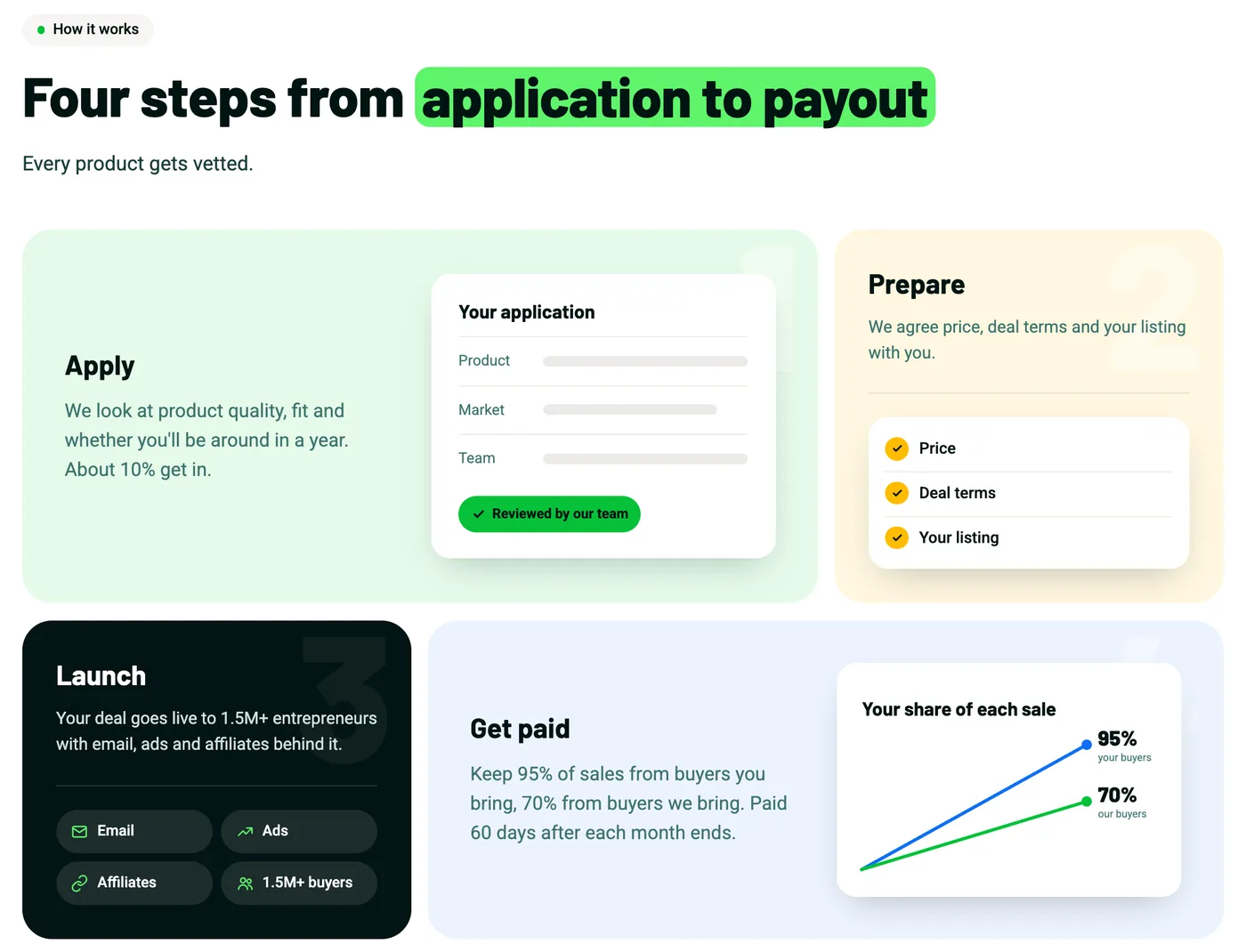
You apply, AppSumo's team reviews the product, market and team, and about 10% get in. Its quality standards page describes a 25-point product checklist, ID checks on founders, a review of runway and revenue model, and testing by its beta users. It rejects pre-launch products, tools with no support plan and consumer-only apps.
If you are accepted, AppSumo agrees the price, deal terms and listing with you. The campaign runs about 60 days with email to its list, affiliates (it says it has 20,000) and, for top performers, Google and Meta ads up to $25,000 in spend. AppSumo says about 40% of partner revenue comes from email.
AppSumo's sell page gives these earnings ranges for a 60-day campaign, based on the top 50% of partners in each category:
| Launch level | Revenue in 60 days (AppSumo's figures) |
|---|---|
| Standard launch | $40,000 to $80,000 |
| Top performer | $100,000 to $400,000 |
| Best in class | $400,000+ |
Its FAQ adds that results vary a lot: "Others get single-digit sales."
The revenue split and payout
The sell page says you keep 95% of sales from buyers you bring and 70% from buyers AppSumo brings. The FAQ says rates are negotiated by product category and expected performance, so treat 95/70 as the starting point, not a guarantee.
AppSumo's partner payment policy (last updated 21 November 2025) adds the details that change your number:
- Your share is calculated on net revenue: gross sales minus the 10% discount AppSumo Plus members get, minus refunds.
- AppSumo can reduce your share to offset affiliate payouts.
- Payment is "Net 60 end-of-month": April sales are paid in early July, through Ramp, by ACH, wire or card.
- Buyers can get a full refund for any reason within 60 days, and refunded sales are taken out of your share.
The payout delay matches the 60-day refund window. Plan your cash flow for a two-month gap.
AppSumo Radar: the self-serve route
Radar is AppSumo's open marketplace. You start from your product URL, build the listing yourself and submit it for free. The page says approved listings take about 9 days (median over the last 30 days), and you must sell a lifetime deal. Radar accepts B2B software, courses and digital products that are production-ready, on their own domain, with English support and a fair refund policy.
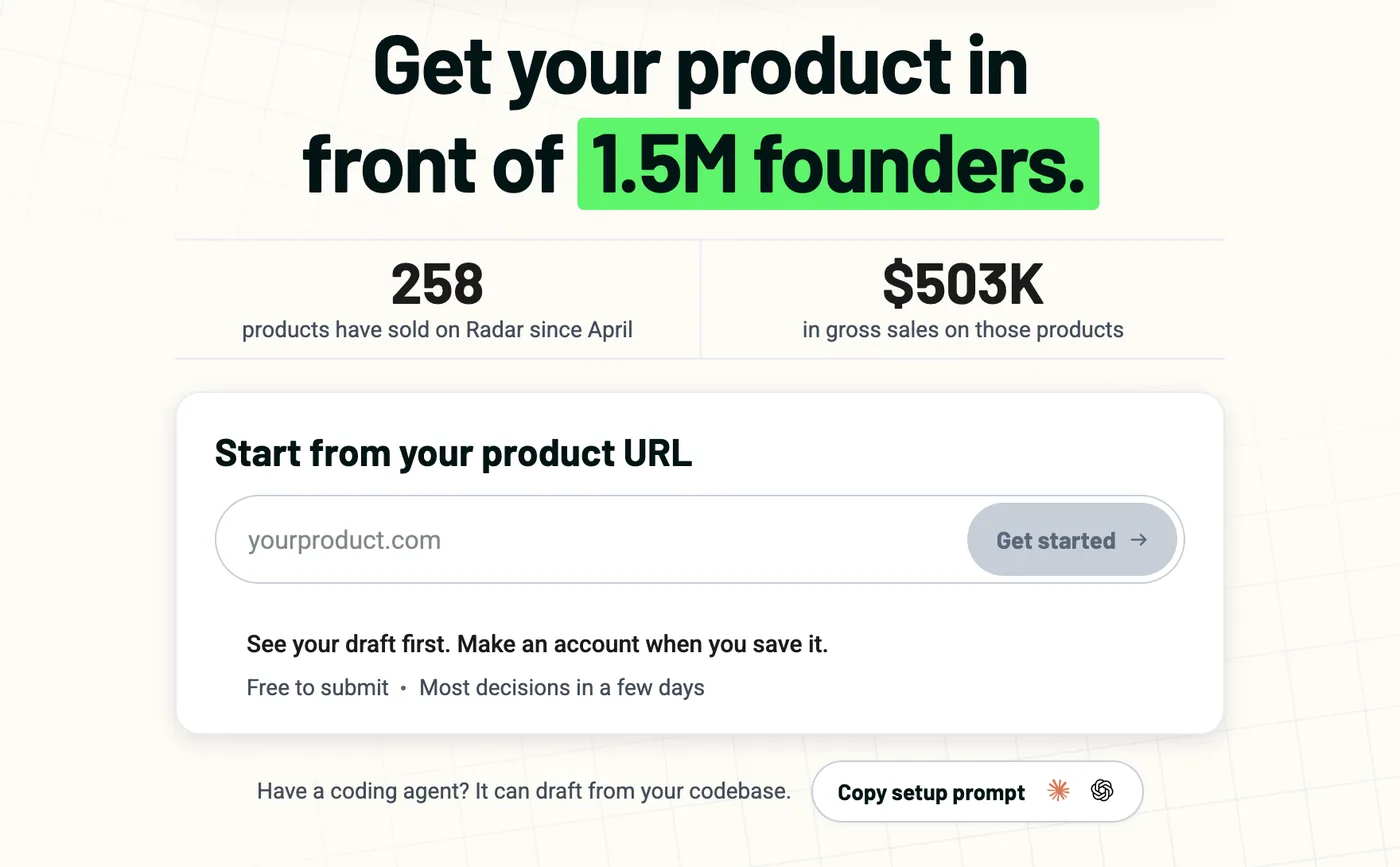
Look at the numbers on that page: 258 products sold $503,000 in gross sales since April. That averages about $1,950 per product, before AppSumo's share. Radar gives you a listing on a large marketplace, but it does not come with the email and ad push of a featured launch.
AppSumo's listing brief recommends an entry tier at $49 or less and a price at least 70% below your regular price, and allows one-time prices from $1 to $9,999.
AppSumo Select
The sell page describes Select as a badge earned by top-performing partners, with dedicated campaigns, priority placement and more investment from AppSumo's team. AppSumo's separate Select page still takes applications and says only the top 1% of applicants are chosen. Most partners start with a standard launch.
AppSumo in 2026
In February 2026, AppSumo founder Noah Kagan posted on X that AppSumo's revenue had declined 50% over the past two years (reported by PPC Land on 7 February 2026). The sell page now says AppSumo is "not exclusively lifetime deals" and will design annual pricing with partners. Only Radar is limited to lifetime deals.
AppSumo alternatives that still run deals
Several older names have closed or changed. PitchGround's domain returned a hosting error page, and DealClub.com now hosts an unrelated venture network. These six were live and selling deals on 20 November 2026.
Dealify
Dealify sells lifetime deals to marketers, growth hackers and founders, and says it has 50,000+ customers and has helped 100+ companies launch. Its vendor page offers lifetime, annual, credit-based or freebie deals, and says the larger share of each sale goes to the vendor, without giving a number. Buyers get a 30-day money-back guarantee. You apply through the "Publish your deal" form on its Run a deal page.
RocketHub
RocketHub runs exclusive launches with a dedicated launch team. The process is an application, a call, a product audit, campaign prep and launch, and the team writes the copy, designs the creatives and runs ads at its own cost. Its vendor page criticizes platforms that keep "70 or 90%" but does not publish its own split. Buyers get a 30-day refund guarantee. Its Black Friday sale runs 23 November to 6 December 2026.
Prime Club
Prime Club takes a different approach: it promotes one or two deals at a time to its members, does not let Google index its deal pages, and does not promote a competing product during your window. The point is to keep the lifetime price away from your recurring customers. It says it has 8,000+ members, runs 30 days of promotion per deal and has generated $120,000 on average per launch. It does not publish its split; you start with a partner application and a call.
DealMirror
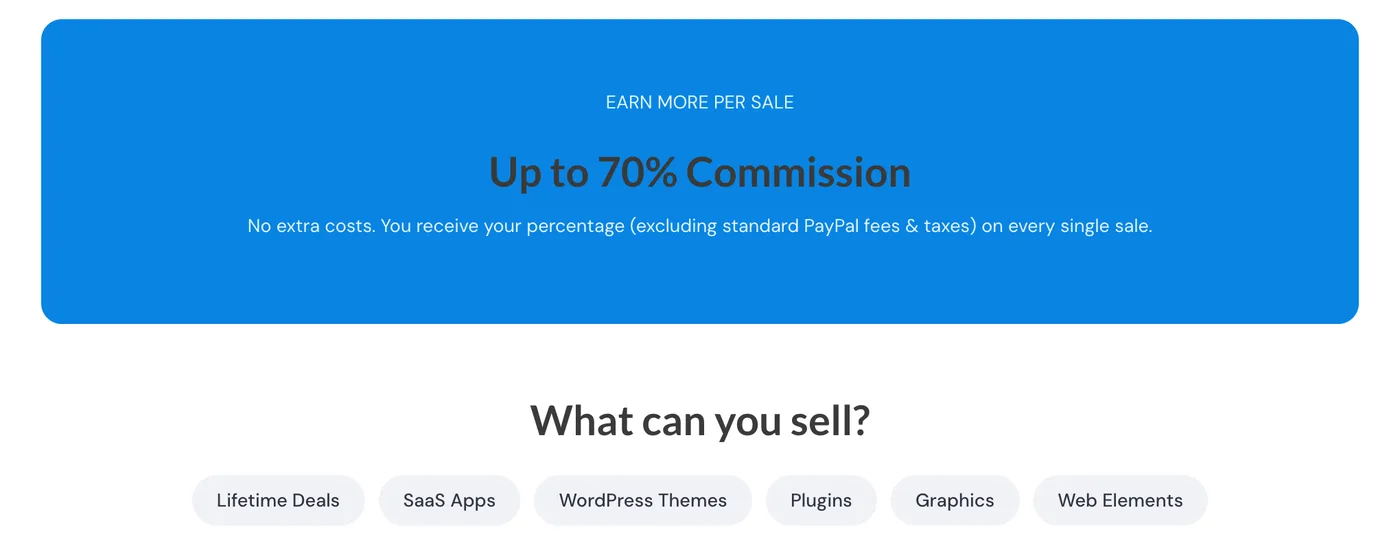
DealMirror is an open marketplace for SaaS, lifetime deals, WordPress themes, plugins and design assets. Its vendor page offers up to 70% of each sale to the vendor, excluding PayPal fees and taxes, with "T&C applied". You register as a vendor, an admin approves you, then each product is reviewed. Buyers get 30 days to request a refund, or 60 days for DealMirror's paid members. It also runs sitewide coupons: when we checked, all deals were 25% off for its pre-Black Friday sale.
StackSocial
StackSocial is a general tech deal store with a Lifetime Deals category next to gadgets, courses and memberships. Vendors apply through its parent company StackCommerce as a "merchant partner". The pitch is distribution: placement on StackSocial and white-labeled shops, a network of 1,000+ distribution partners including media outlets and independent publishers, plus email, SMS and affiliates. It does not publish software vendor terms. Its buyers are consumers as much as businesses, so it fits desktop apps, VPNs, storage and AI tools better than B2B SaaS.
DealFuel
DealFuel sells software deals alongside design resources such as fonts, stock photos and templates. Submitting a deal requires a DealFuel account, and it does not publish vendor terms. It fits tools for designers, bloggers and web developers.
Deal curators and free listing sites
Curators do not sell your deal. They list deals from many platforms and send their readers to the checkout. They are useful once your deal is live, or if you run the deal on your own site and need buyers to find it.
| Site | What it is | Audience it states | How to get listed |
|---|---|---|---|
| SaaSPirate | Deal curator since 2019, 2,513+ deals listed | 30,387 newsletter subscribers | Submission form; deal types include Lifetime, Discount, Free, Extended Trial and Seasonal. No fee stated |
| LTD Hunt | Community hub for lifetime deals, run by the agency ArtXM | 19,000+ members, 29,220 subscribers | Listing route not published; offers managed launches |
| Lifetimo | Curator of 700+ live deals from 35+ deal sources | Two emails a week to subscribers | Not published (contact page only) |
| DealMyApp | Indie app directory with a Deals section | DR 34, about 1,061 visits a month (our catalog) | Free with sign-in; link was nofollow |
None of these replaces a selling platform, but a listing on each costs little time. DealMyApp is the only one in our directory catalog; the rest are deal communities, not directories.
Selling a lifetime deal on your own site
You do not need a marketplace to sell an LTD. Add a one-time price to your checkout and keep almost all of each sale.
Checkout options and fees
| Checkout | Fee per sale (published) | Merchant of record |
|---|---|---|
| Gumroad | 10% + $0.50 on direct sales; 30% when the buyer comes through Gumroad Discover | Yes, since 1 January 2025 |
| Paddle | 5% + $0.50 per checkout transaction | Yes |
A merchant of record collects and pays sales tax and VAT for you, which matters when lifetime buyers come from many countries.
Skip Lemon Squeezy for a new deal: it no longer accepts new sign-ups and shuts down on 31 March 2027. Its team points sellers to Stripe Managed Payments instead.
What a $59 lifetime code pays you
Using each platform's published rate, before refunds and taxes:
| Where the sale happens | You receive |
|---|---|
| AppSumo, buyer you brought (95%) | $56.05, before Plus discounts and refunds |
| AppSumo, buyer AppSumo brought (70%) | $41.30, before Plus discounts and refunds |
| DealMirror (up to 70%) | Up to $41.30, minus PayPal fees |
| Paddle (5% + $0.50) | $55.55 |
| Gumroad direct (10% + $0.50) | $52.60 |
| Gumroad Discover (30%) | $41.30 |
What you give up without a marketplace
Self-hosting keeps the margin but not the audience: no 1.5 million-subscriber list, no affiliates, no review section. It works when you already have an email list, a community or launch traffic. Without those, list the deal on the curators above.
What a lifetime deal does to MRR, churn and support
MRR
Lifetime revenue is one-time revenue. It does not count toward MRR or ARR, and investors will separate it out: a $100,000 deal month adds nothing to MRR. Track deal revenue on its own row.
Support load
Every buyer can file tickets for as long as the product exists. AppSumo rejects partners with no support plan and expects you to answer public reviews and questions during the campaign. Prime Club's pitch to founders goes the other way: it argues lifetime buyers stay loyal through bugs because they want the deal to keep its value. Both can be true. Budget support time per thousand buyers before you set the code cap.
Server and AI costs
Usage costs scale with buyers, and a lifetime buyer never pays again. A heavy user on a $59 code who sends AI calls every day costs you money every month. This is the main reason lifetime deals fail for AI products: cap credits, or leave per-call features out of the deal.
Churn and lifetime value
Some deal buyers own hundreds of codes (one buyer quoted by PPC Land spent six figures on about 1,000 purchases over a decade), and not every code gets set up. That does not cost you revenue (they already paid), but it distorts your activation and churn numbers. Report deal cohorts separately from subscribers so you can still see how your real customers behave.
How to structure the deal: caps, tiers and code limits
Cap volume, not the core feature
AppSumo's brief says to scope the entry tier by limiting seats, projects or usage, "never by cutting the core value". A buyer who cannot use the main feature asks for a refund within 60 days.
Leave out features that cost you per use
AI credits, SMS, email sends, storage and API calls cost you money on every use. Give a fixed monthly allowance, or sell them as paid add-ons on top of the lifetime plan.
Cap the number of codes
Decide the maximum number of buyers you can support, then cap the stack (AppSumo allows 1 to 10 codes per buyer) and the total campaign. A short campaign that sells out is easier to support than a deal that stays open for a year.
Write down what "lifetime" covers
AppSumo's brief tells partners to state what is included forever and what could become paid later, the data limits and what happens at the ceiling, data export, and the refund window. Put the same terms on your own checkout page.
Should you run a lifetime deal?
A lifetime deal is a good idea when
- Your cost to serve one more user is low (no per-use AI or SMS costs, or they are capped).
- You need cash now and do not want to raise money.
- Your buyers overlap with AppSumo's audience: small businesses, marketers, agencies, creators.
- You want a large group of users and reviews quickly. Lifetime buyers write public reviews, and you can ask them to review you on other sites too, as in our guide to getting your first software reviews.
- You can handle a spike in support for 60 days and steady tickets after.
A lifetime deal is a bad idea when
- Every active user costs you money each month.
- Your target customers are enterprises; LTD buyers rarely are.
- Your subscription price is still being tested. A $49 lifetime price anchors buyers low, and subscribers who find it later will ask why they pay monthly.
- You plan to raise money soon and need clean MRR.
- You cannot staff support for buyers who will never pay again.
Our view: run one deal, early, with tight caps, on one platform. If AppSumo accepts you, its audience is the largest. If it does not, a capped deal on your own checkout plus the curators above costs less in fees, and Radar or Dealify give you a marketplace listing.
Mistakes founders make with lifetime deals
- Selling the whole product forever. No caps on seats, usage or AI credits means your heaviest users cost you the most, permanently.
- Ignoring the payout gap. AppSumo pays 60 days after each sales month. A deal sold in April pays in July.
- Not reading the contract. Outside AppSumo, splits, payout dates and refund handling are negotiated. Get them in writing.
- Running deals again and again. Each new deal lowers what buyers expect to pay, and AppSumo checks refund rates and reviews from your last campaign before accepting you again.
- Launching with no traffic of your own. On AppSumo you keep 95% of sales from buyers you bring and 70% from its buyers. On Radar and your own site, your traffic is most of the traffic. Line up launch traffic before the deal goes live; our lists of sites like Product Hunt and the SaaS launch budget guide cover where it comes from.
- Letting your product be hard to find. Deal buyers search your name before they buy. If the only results are the deal page, they hesitate.
That last one is easy to fix before the deal starts. Listing the product on launch platforms and software directories gives buyers real product pages to find and gives you backlinks that outlast the campaign. AgentLaunch's AI agent does those submissions from Claude Code, Codex or Cursor, so you can focus on the deal itself. For the wider plan, see how to launch a SaaS product and why launch traffic often does not convert.
FAQ
What is a lifetime deal?
A lifetime deal (LTD) is a one-time payment for permanent access to a software plan, instead of a subscription. "Lifetime" means for as long as the product exists, within the limits of the tier you bought.
What are the best sites to sell a SaaS lifetime deal?
AppSumo is the largest. As of November 2026, Dealify, RocketHub, Prime Club, DealMirror, StackSocial and DealFuel also sell deals, and you can sell one on your own site through Gumroad or Paddle.
How much does AppSumo take from a lifetime deal?
AppSumo's vendor page says you keep 95% of sales from buyers you bring and 70% from buyers AppSumo brings, so AppSumo takes 5% or 30%. Rates are negotiated by category, and your share is calculated after Plus discounts and refunds.
How long does AppSumo take to pay vendors?
AppSumo pays 60 days after the end of each sales month, on a Net 60 end-of-month basis. Sales made in April are paid in early July.
Is a lifetime deal a subscription?
No. A subscription charges every month or year. A lifetime deal is one payment, so it does not count toward MRR, even though the buyer keeps using the product.
Are SaaS lifetime deals worth it for founders?
They are worth it when serving one more user costs you little, you need cash or reviews fast, and you can cap usage. They are a poor fit for products with per-use AI or messaging costs, or for enterprise software.
What is LTD in software?
LTD stands for lifetime deal: software sold for a one-time price instead of a recurring subscription. LTD platforms such as AppSumo sell these deals to small businesses and take a share of each sale.