Vibe coding growth guidesSEO and backlinks
How to Get Backlinks for a New Website: 5 Steps, Ordered by Effort
A plan for a brand-new domain: free dofollow listings first, then GitHub, founder content, a linkable asset and journalist requests, all within Google's link rules.
 By Pruthvi RajNovember 23, 2026
Here is how to get backlinks for a new website: start with free listings you control, then work up to links you have to earn.
Quick answer:
- Put every link on your own custom domain, not a lovable.app or replit.app subdomain.
- Claim 15–30 free, dofollow listings that fit your product.
- Add GitHub, registries and marketplaces for discovery, though most of those links are nofollow.
- Publish founder content and pitch podcasts.
- Build one data asset or free tool, then answer journalist requests.
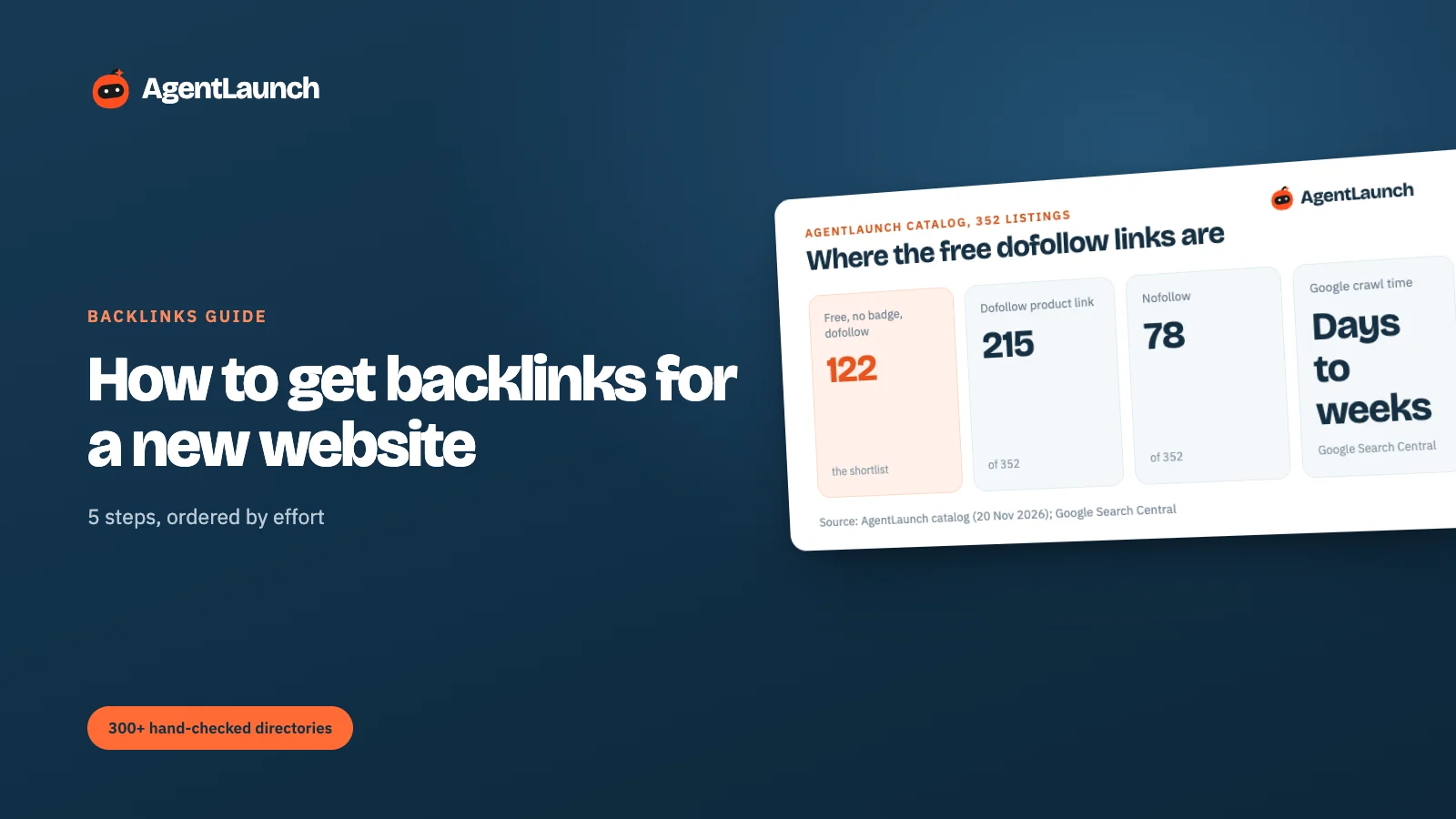
Of the 352 directories, launch platforms and review sites in the AgentLaunch catalog, 122 are free, need no badge and gave a dofollow product link. That's where a brand-new domain starts. Each step after it takes more effort than the one before.
What you'll need
| What | Time | Cost |
|---|---|---|
| Custom domain with HTTPS | 30 minutes | Domain fee |
| Product brief: name, tagline, description, logo, 3 screenshots | 1 hour, once | Free |
| Shared inbox for sign-ups | 10 minutes | Free |
| Spreadsheet of live listing URLs | 10 minutes | Free |
| GitHub account | Existing | Free |
| DR checker | Minutes | Free |
Write a 60-character tagline and a 500-character description first. Those are Product Hunt's limits, and most other forms accept longer text.
How to get backlinks for a new website without breaking Google's rules
A backlink is a link from another site to yours. For a new domain it does two jobs.
The first is discovery: Google finds some new pages by following links from pages it already knows. The second is authority, which Domain Rating tries to measure.
Dofollow, nofollow, ugc and sponsored
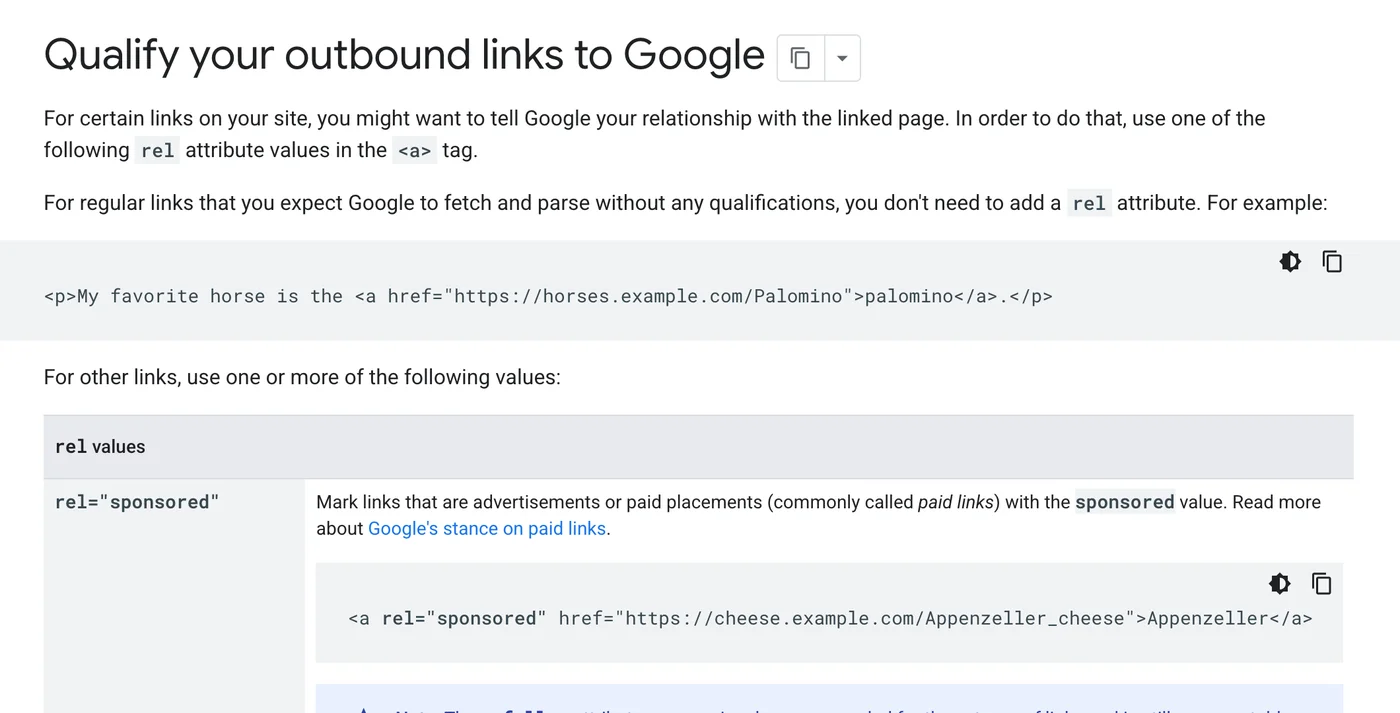
Google's rel attribute documentation lists three values a site can put on a link:
rel="sponsored"for ads and paid placements.rel="ugc"for user content such as comments and forum posts.rel="nofollow"when the site doesn't want to vouch for the linked page.
A link with none of these is what SEO people call dofollow. Since 2019, Google has treated all three values as hints rather than strict rules.
So a nofollow link isn't worthless. But a followed link from a relevant site is the one that counts toward authority.
What Google calls link spam
Google's spam policies define link spam as links made mainly to manipulate rankings. Its examples include:
- Buying or selling links for ranking purposes, including trading goods or services for them.
- Excessive link exchanges, the "link to me and I'll link to you" kind.
- Using automated programs or services to create links to your site.
- Low-quality directory or bookmark site links.
- Guest posts or press releases with optimized anchor text that pass ranking credit.
Paid links are fine only with nofollow or sponsored. That rules out private blog networks, cheap bulk backlink gigs and link swaps.
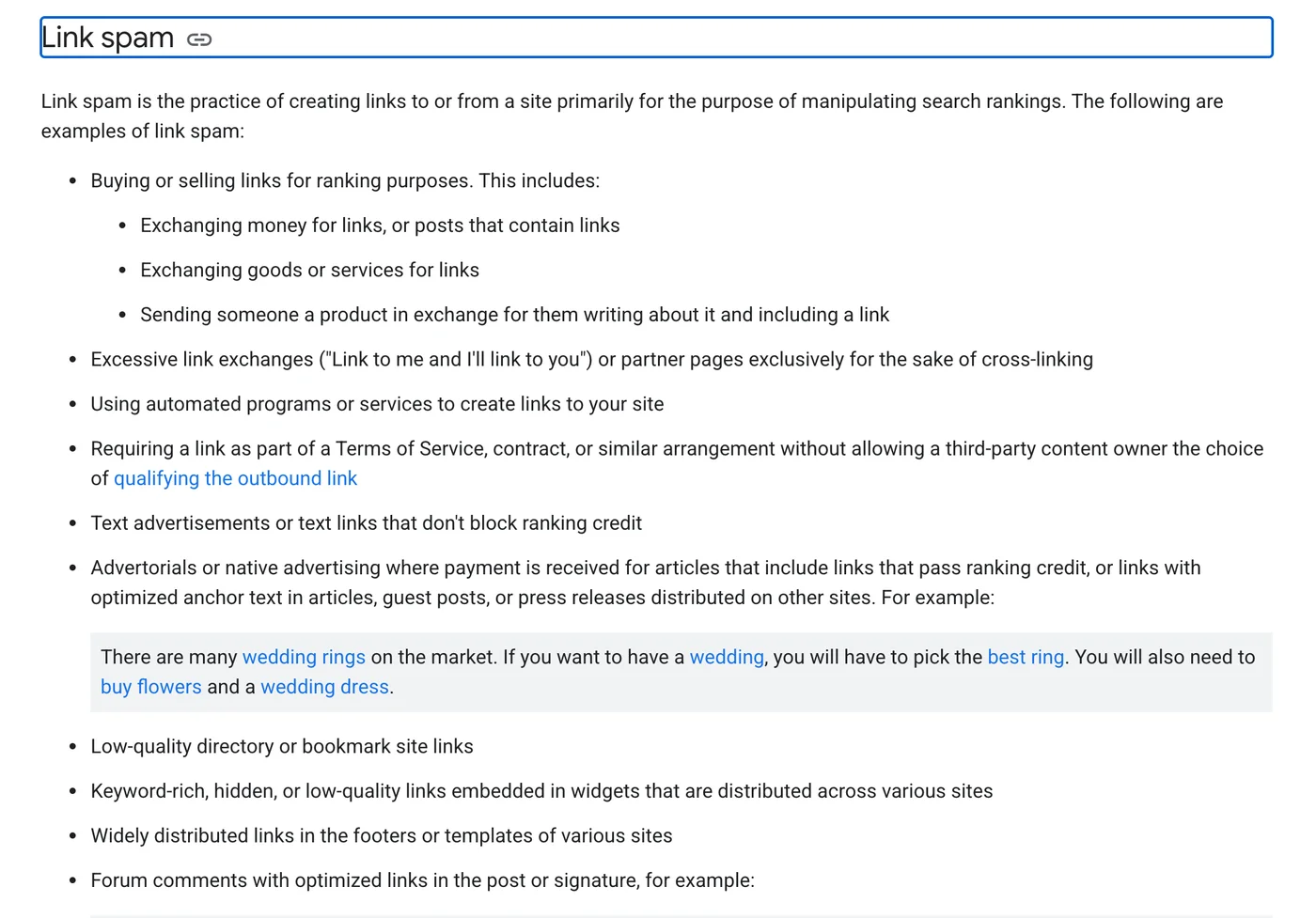
Note that low-quality directories are named. Directories aren't automatically safe.
The problem is links made to game rankings on sites nobody uses. So judge every listing by where it lands: a moderated site with real visitors, a page written for that audience, one listing per site. That's the filter in Step 1.
Step 1: Claim foundational listings (directories, launch platforms, review sites)
These are the only backlinks a brand-new product can get on day one, with no one knowing who you are. You fill a form, someone reviews it, and a product page with your link goes live.
What the catalog says
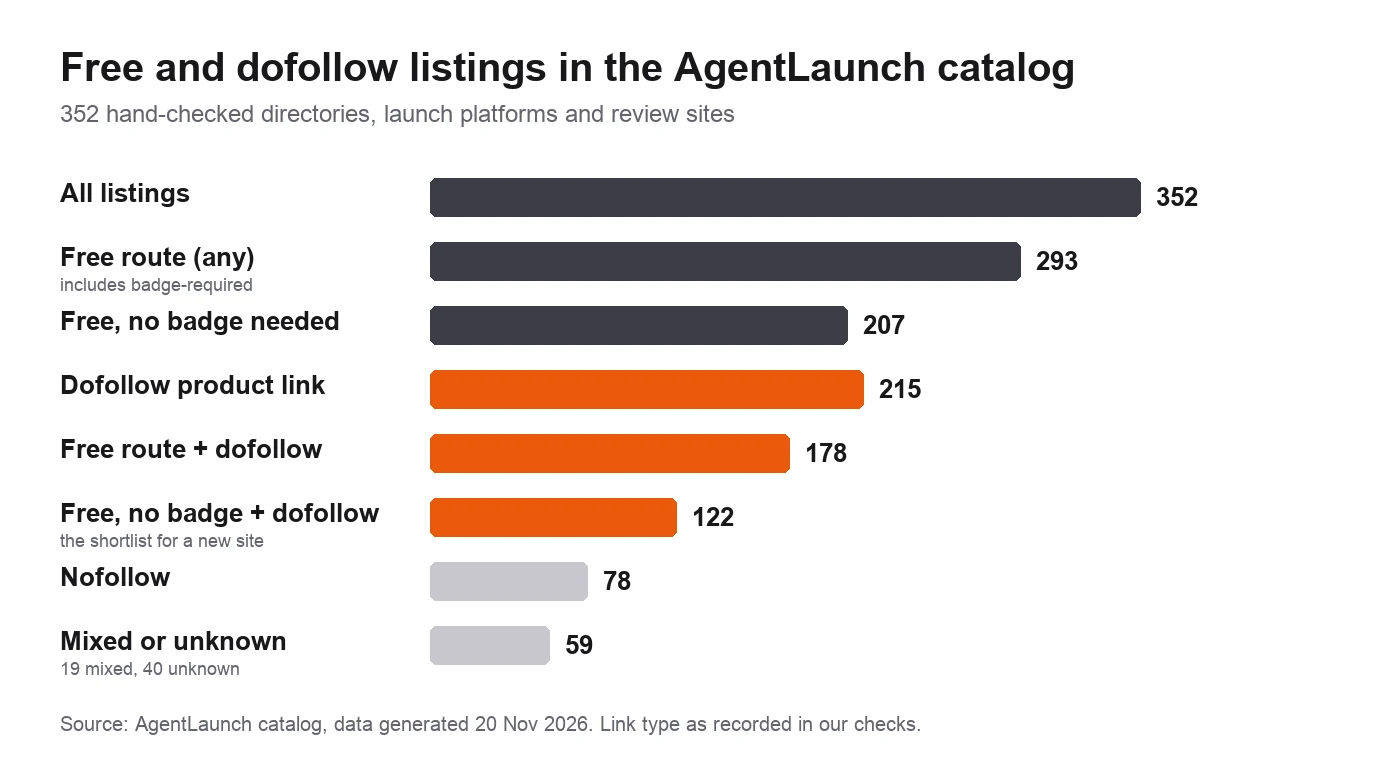
Here's how the 352 profiles in the AgentLaunch catalog break down.
- 293 have a free route, but 86 of those want a badge or link back.
- 207 are free with no badge.
- 215 gave a dofollow product link, 78 were nofollow, 19 mixed and 40 unknown.
- 122 are free, need no badge and are dofollow. That's your shortlist, on our dofollow directories page.
Top 15 free dofollow listings for a web app or SaaS
All are free, need no badge, give a dofollow link and fit a web app or SaaS. DR is Ahrefs Domain Rating, and visits are monthly SimilarWeb estimates.
| Listing | DR | Visits/mo |
|---|---|---|
| Product Hunt | 91 | 3.7M |
| Finances Online | 87 | 9.5K |
| TrustRadius | 85 | 290K |
| AlternativeTo | 80 | 2.1M |
| FindStack | 77 | 50K |
| SaaSworthy | 75 | 220K |
| PeerPush | 79 | 200K |
| NickLaunches | 75 | 2.8K |
| CrozDesk | 74 | 255K |
| SelectHub | 74 | 122K |
| FoundrList | 72 | 20K |
| Tiny Startups | 71 | 50K |
| Launchpadly | 70 | 14K |
| Serchen | 67 | 143K |
| ToolDirs | 67 | 3.4K |
Most are software review sites or launch platforms. TrustRadius is B2B, AlternativeTo's followed link is the website link, and ToolDirs sells paid extras.
Product Hunt was dofollow in our October check. It blocks automated requests, so we couldn't re-check it in November.
We left out sites that fit only extensions or APIs, like VS Code Marketplace and RapidAPI. We also skipped ones that tie the followed link to upvotes, a badge or a paid tier, like Uneed and TinyLaunch.
Filter the rest before you submit
DR alone misleads. In our October analysis of 394 directories, 15 of the 71 at DR 70 or higher got under 10,000 visits a month.
Before each submission, check three things:
- Does the site get real traffic and review submissions?
- Do live listings link out without
nofollow? Inspect one listing's product link and read therel. - Does it fit your product type? A B2B review site won't list a consumer habit tracker.
Our guide on how to check directory backlink quality covers each check.
Do the submissions
Batch them. 10–20 relevant listings in week one beat 100 random ones.
Filling dozens of forms by hand takes days. AgentLaunch is an AI agent you run from Claude Code, Codex or Cursor that submits real listings to 300+ hand-checked launch platforms and directories. Each site's own reviewers still decide whether to publish you.
It writes copy for each site, fills forms in a real browser, stops for CAPTCHAs, payments or 2FA, and tracks every listing. Either way, first check which directories fit your app for free.
Our guide to where to submit a vibe-coded app lists them by product type. Are startup directories worth it covers what they do and don't send.
Step 2: Use GitHub, package registries and integration marketplaces
Vibe coders already have accounts on developer platforms, so these take minutes. Expect discovery and clicks more than authority.
Can you get a backlink from GitHub?
Yes, but it's nofollow. We checked the raw HTML of public GitHub pages in November:
- The repo About website link is
rel="noopener noreferrer nofollow". - Links inside a rendered README are
rel="nofollow". - Organization and user profile website links are
rel="nofollow".
Still do it. Set the About website field, link your domain in the README, and keep the repo public if you can.
A repo people star can send visitors. Developers who find it may write about you on their own sites, and that's where followed links come from.
Package registries and marketplaces
- PyPI: homepage and source links were
rel="nofollow". - npm: we couldn't check, because npmjs.com blocked our request.
- Chrome Web Store: the developer website link was
rel="ugc nofollow". - Hugging Face: organization and model card links were
rel="nofollow". - VS Code Marketplace: DR 92 and dofollow, but only for VS Code extensions.
- Developer tool directories: 9 of the 14 in our catalog are dofollow, including LibHunt for open-source projects.
If your app has an API, an extension or an integration, list it where that ecosystem's users browse. If not, skip this step.
Step 3: Publish founder content and get on podcasts
Profiles that pass a followed link
Two blogging platforms we checked put no nofollow on the profile website link:
- dev.to:
rel="noopener me"on a public profile's website link. - Hashnode:
rel="noopener"on a profile blog link, from the one profile we checked.
Write posts that teach something you learned building the app. Think of the prompt that fixed your auth bug, the Supabase schema you landed on, or your launch numbers. Link to your site where it helps the reader.
Show HN and community posts
On the Show HN page we looked at, stories with 2–5 points had rel="nofollow". Stories with 15 or more points had no rel at all. That's one day's observation, not a published rule, and comment links were nofollow.
Read the Show HN guidelines first. Show HN is for things people can try, and the rules now say no to "quickly-generated one-offs".
Podcasts
Many shows publish show notes that link to the guest's site. Smaller founder and indie-maker shows are the realistic target for a new product.
Pitch a specific story, like what broke when you built your app in a weekend. Don't pitch a product description. Check a past episode's show notes for the rel before you count it.
Step 4: Build one linkable asset
People link to data and tools, not landing pages. The agent that built your app can build either in a day.
- Original data: anonymized numbers your app already collects, published with a chart and a short method note.
- A free tool: a calculator, checker or generator for one narrow job.
- A template or dataset others can reuse with credit.
Then tell the people who write about your topic: newsletter authors, bloggers with resource lists, and communities where the tool helps.
This is slower than Step 1. But these are the links Google treats as normal: editorial, earned and unpaid.
Step 5: Answer journalist requests (digital PR)
Reporters post requests for expert sources, and quoted sources often get a link. Two services have a free route:
- HARO: Featured.com bought HARO from Cision in April 2025 and revived it. Daily media queries are free by email.
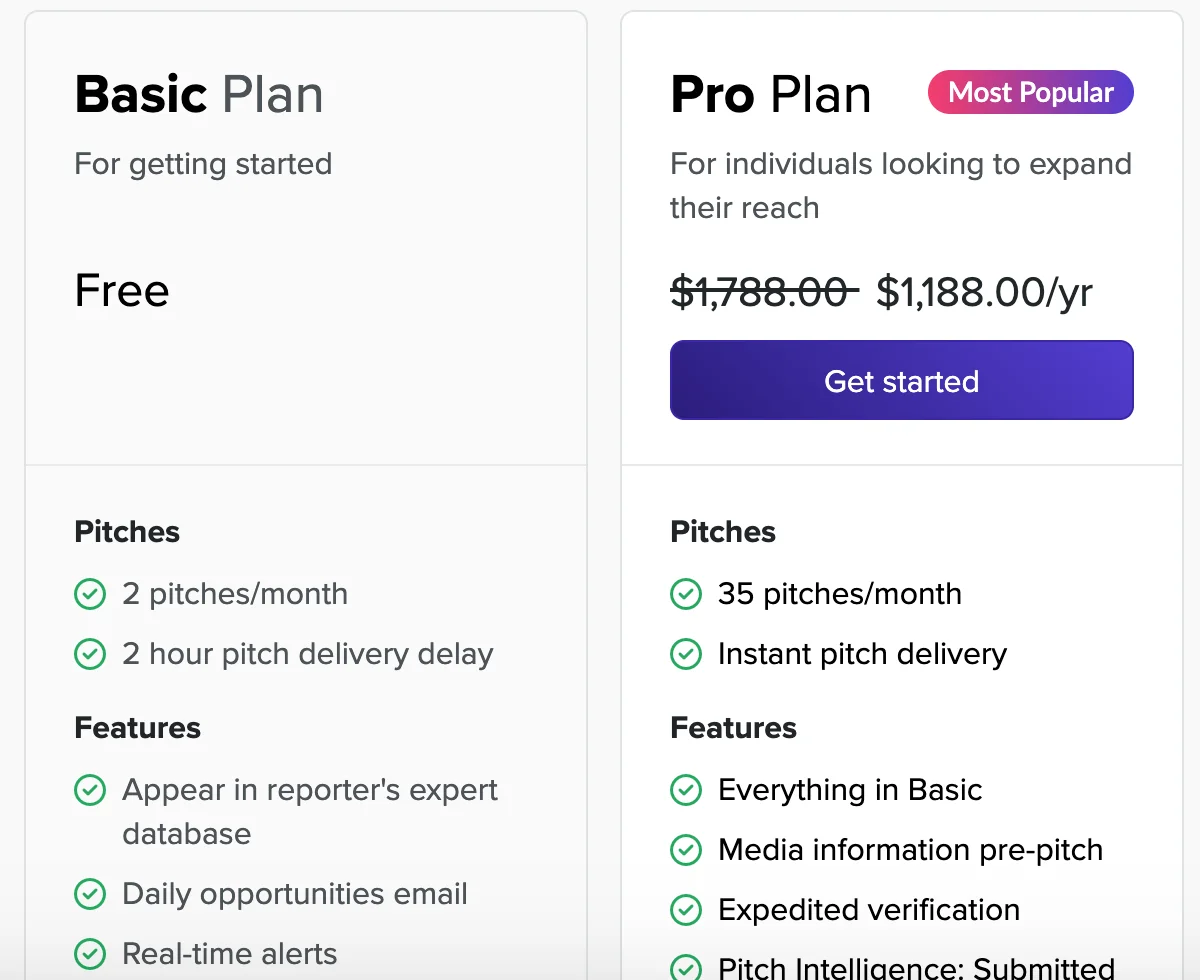
- Qwoted: the free Basic plan gives you 2 pitches a month with a 2-hour delay, a daily opportunities email and a spot in its expert database.
Answer only where you have first-hand experience. Reply fast, in under 150 words, with one specific number or example.
Not every publication links to its sources, so check the rel on any link you get.
How long do backlinks take to get indexed?
Nobody publishes a fixed timeline, but three facts set expectations:
- Review time: of 65 directories in our catalog that state one, 41 say 48 hours or less. A few say up to 4 weeks.
- Crawling: Google's recrawl docs say crawling takes a few days to a few weeks. You can't request indexing for pages on sites you don't manage.
- Rankings: Ahrefs' time-to-rank study found only 1.74% of new pages reached the top 10 within a year. The average #1 page was 5 years old.
Ahrefs only counts a link after its own crawler finds it, so DR can lag your submissions. If it doesn't move, read why Domain Rating isn't increasing after backlinks.
Common mistakes
- Building links to the subdomain. Links to yourapp.lovable.app build authority for a subdomain you'll leave. Set up the custom domain first.
- Buying high-DR packages. Paid links without
sponsoredornofollowbreak Google's policy, and you can't see where bulk links land. - Submitting to every list you find. Google names low-quality directories as link spam. Fit and real traffic come first.
- Pasting the same description everywhere. Review sites want features and pricing. Launch boards want the story and who it's for.
- Trusting dofollow claims. Check a live listing's
relyourself. Some sites follow only paid or badge listings. - Not recording live URLs. Without them you can't check links or count what you have.
FAQ
How do I get backlinks for a new app?
Start with launch platforms and directories that take new products, like PeerPush, Tiny Startups and Product Hunt. Then add GitHub, any marketplace you plug into, and posts on dev.to or Hashnode. Our list of your first 10 free backlinks puts them in order.
How do I get backlinks for my website for free?
All five steps can be done without paying. In our catalog, 122 of 352 listings are free, need no badge and are dofollow.
What are high quality backlinks?
Followed links from relevant sites with real traffic, placed by an editor or after human review. See our dofollow directories for startups for vetted examples.
Are dofollow backlinks better than nofollow?
For authority, yes. Nofollow links may still help discovery, but a followed link is the one built to pass ranking credit.
Can I get a backlink from GitHub?
Yes, in your repo's About field, README and profile. GitHub marks them nofollow, so they help people find you more than they help your DR.
How long do backlinks take to get indexed?
Google says crawling takes a few days to a few weeks. Most directories that publish a review time say 48 hours or less.